+86 18513032986


Copper vs. Aluminum Bus in Low-Voltage Switchboards
Admin 2026-03-03Content
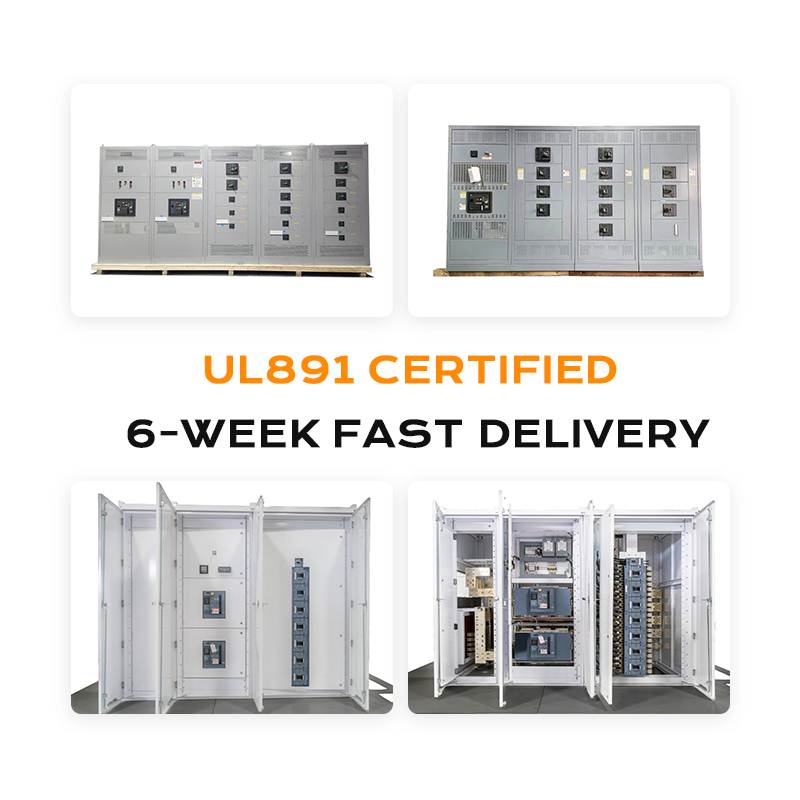
In North American low-voltage power distribution systems, copper bus is still the dominant choice for UL 891 switchboards. Aluminum bus is permitted by code and widely used in certain applications, yet many engineers continue to specify copper—especially for mission-critical facilities.
Electrical Conductivity and Sizing
Copper has a conductivity of approximately 100% IACS, while aluminum is about 61% IACS. To carry the same current, aluminum busbars require a significantly larger cross-sectional area. This affects:
- Bus spacing and enclosure dimensions
- Heat dissipation
- Mechanical bracing requirements
In compact switchboard designs, especially above 2000A, copper allows more efficient layouts and predictable thermal performance.
Mechanical Strength and Short-Circuit Performance
Under short-circuit conditions, busbars are subjected to high electromechanical forces. Copper provides:
- Higher tensile strength
- Greater rigidity
- Better resistance to deformation
In high fault-rated UL 891 switchboards (65kA, 100kA, or higher), mechanical stability is critical to maintaining spacing and insulation integrity. Aluminum can meet these requirements, but it typically requires larger sections and reinforced support structures.
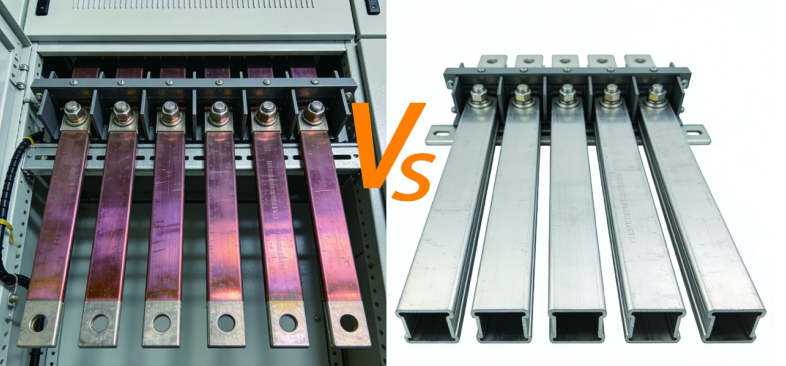
Connection Reliability and Long-Term Stability
Connection integrity is one of the most important considerations in bus design. Aluminum naturally forms an oxide layer when exposed to air. Aluminum oxide is not conductive and can increase contact resistance if not properly managed. Mitigation typically requires:
- Surface preparation
- Antioxidant compounds
- Proper torque control
- Periodic inspection
Copper also oxidizes, but its oxide layer remains conductive and does not present the same level of risk in bolted connections. For data centers, healthcare facilities, and industrial plants where downtime is costly, connection stability is often a deciding factor.
Specification Practices in North America
While both copper and aluminum are acceptable under UL 891, many consulting engineers specify “copper bus only” in project documents. Common reasons include:
- Familiarity and standardization
- Reduced long-term maintenance concerns
- Simplified inspection and approval processes
- Higher perceived reliability in critical infrastructure
For this reason, copper bus remains the default option in many commercial and industrial projects.
When Aluminum Bus Is Appropriate
Aluminum busbars are commonly selected in:
- Cost-sensitive projects
- Lower current applications
- Utility or non-critical distribution systems
- Projects where larger enclosure space is available
When properly engineered and maintained, aluminum can perform reliably. The decision ultimately depends on lifecycle expectations, risk tolerance, and project priorities.
DSJ Electrical’s Engineering Approach
DSJ Electrical has been manufacturing high- and low-voltage power distribution equipment for over 43 years. Our production facilities support a wide range of configurations, including UL 891 switchboards for the North American market.
In our UL 891 projects:
- Copper bus is the standard offering
- Aluminum bus is available upon request
- All bus systems are designed based on current rating, fault duty, and enclosure constraints
- Mechanical bracing and spacing comply strictly with UL requirements
Material selection is not treated as a cost decision alone. It is evaluated in the context of application risk, operating environment, and expected service life.
Conclusion
Copper bus is widely specified in UL 891 switchboards not simply because of tradition, but because of its electrical performance, mechanical strength, and long-term connection stability. Aluminum remains a viable alternative in appropriate applications. The correct choice depends on engineering requirements rather than material price alone.
For projects in commercial buildings, industrial facilities, utilities, or mission-critical infrastructure, early discussion of bus material selection can help avoid redesign and approval delays later in the process.
For exclusive deals and latest offers, sign up by entering your email address below.



 +86 18513032986
 FLC Center, Chaoyang District, Beijing, China
Copyright © DSJ Electrical Co., Ltd. All Rights Reserved
Power Distribution Equipment & System Manufacturer