+86 18513032986


UL891 Switchgear vs Switchboard: How DSJ ELECTRICAL Helps You Choose the Right Power Distribution Equipment
Admin 2026-03-10Content
When designing or upgrading an electrical system for a commercial building or industrial facility, one of the most important decisions you will make is selecting the right power distribution equipment. The choice between UL891 switchgear and switchboards affects safety, reliability, maintenance, and long-term operational costs.
At DSJ ELECTRICAL, we frequently support contractors, EPC companies, and facility owners in selecting compliant and high-performance low voltage switchgear, electrical switchboards, and custom power distribution systems. Understanding the technical and regulatory differences between these solutions is essential for making the correct investment.
What Is UL891 SWITCHGEAR?
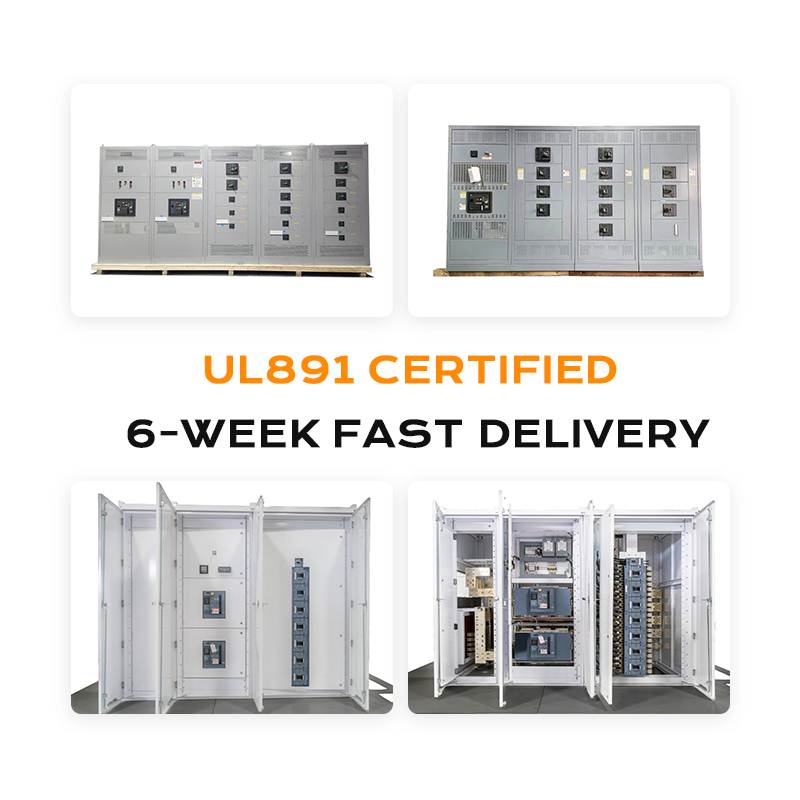
UL 891 refers to the Underwriters Laboratories standard for dead-front switchboards. Equipment built under this standard is commonly marketed as UL891 switchgear, although technically it falls under the switchboard category.
UL891 equipment is widely used in:
- Commercial office buildings
- Shopping centers
- Light industrial facilities
- Institutional projects

Key Characteristics of UL891 SWITCHGEAR
- Dead-front construction – No live parts exposed from the front.
- Panelboard-style design – Components are mounted in common compartments.
- Lower short-circuit ratings compared to metal-clad switchgear.
- Cost-effective solution for standard distribution applications.
- Typically uses molded case circuit breakers (MCCBs).
UL891 switchgear is ideal for applications where moderate fault current levels exist and where arc-resistant construction is not required.
What Is Metal-Clad Switchgear?
In contrast, metal-clad switchgear is manufactured under UL 1558. This type of switchgear provides higher protection, compartmentalization, and performance capabilities.
It is commonly used in:
- Heavy industrial plants
- Petrochemical facilities
- Utility substations
- Data centers with high fault current availability
Key Features of UL1558 Switchgear
- Fully compartmentalized sections
- Draw-out power circuit breakers
- Higher short-circuit withstand ratings
- Enhanced arc flash protection options
- Superior serviceability and maintainability
Although more expensive, metal-clad switchgear provides greater long-term durability and safety for critical infrastructure.
Switchgear vs Switchboards: Core Differences
| Feature | UL891 SWITCHGEAR (Switchboard) | UL1558 Metal-Clad Switchgear |
| Governing Standard | UL 891 | UL 1558 |
| Breaker Type | Molded Case Circuit Breakers | Draw-out Power Circuit Breakers |
| Compartmentalization | Limited | Fully isolated |
| Short-Circuit Rating | Moderate | High |
| Arc-Resistant Options | Limited | Available |
| Cost | Lower | Higher |
| Maintenance | Front access | Front and rear access |
How to Determine Which Equipment You Need
Selecting the right electrical distribution equipment requires careful evaluation of several factors.
Available Fault Current
If your facility has high available fault current from the utility transformer, metal-clad switchgear may be necessary. UL891 switchgear has lower short-circuit withstand capabilities.
Criticality of Operations
Facilities such as hospitals and data centers require maximum uptime. Higher-grade switchgear with draw-out breakers allows faster maintenance and replacement.
Arc Flash Safety Requirements
Arc flash mitigation is increasingly important. Advanced switchgear solutions may include:
- Arc-resistant construction
- Zone selective interlocking (ZSI)
- Remote racking systems
- Maintenance mode switches
Space Constraints
Switchboards often require less depth and can be more compact, making them suitable for commercial electrical rooms with limited space.
Budget Considerations
UL891 switchgear offers a cost-effective power distribution solution for many standard commercial projects.
For exclusive deals and latest offers, sign up by entering your email address below.



 +86 18513032986
 FLC Center, Chaoyang District, Beijing, China
Copyright © DSJ Electrical Co., Ltd. All Rights Reserved
Power Distribution Equipment & System Manufacturer