+86 18513032986


A Guide to Temporary Switchboards in Australia: Standards, Compliance, and Safety
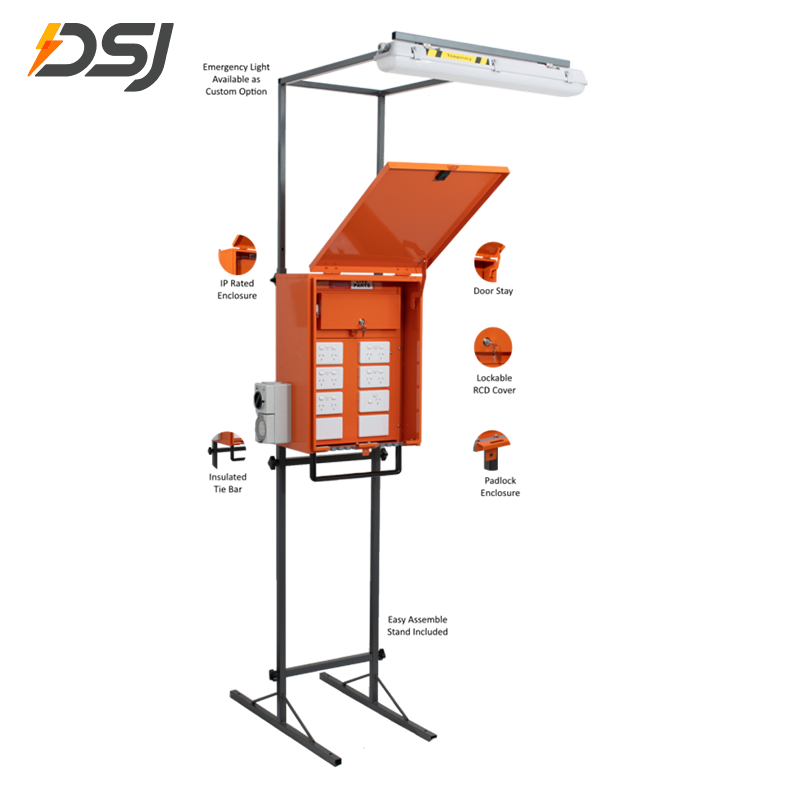
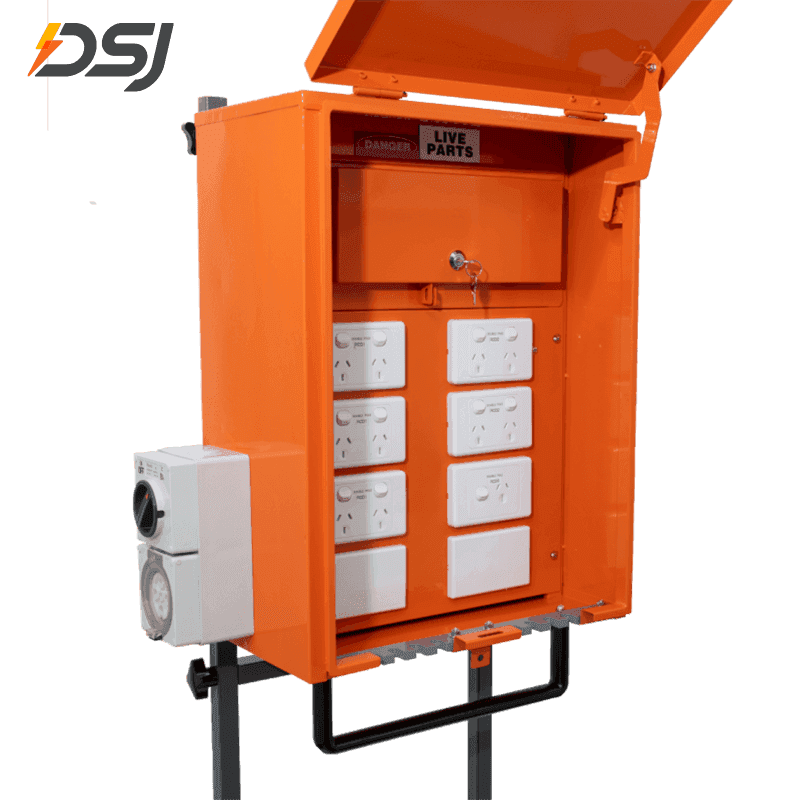
Admin 2026-04-14If you've ever walked past a construction site in Australia, you've likely noticed a sturdy green or orange cabinet fitted with multiple outlets and a padlock. That's a temporary switchboard—often referred to as a site distribution board or temporary power box. Despite its name, this piece of equipment plays a critical role in site safety. What many don't realise is that temporary switchboards in Australia are subject to strict legal and technical requirements. If you're involved in construction, renovation, or any project requiring temporary power, understanding these rules isn't just about compliance—it's about keeping people safe.
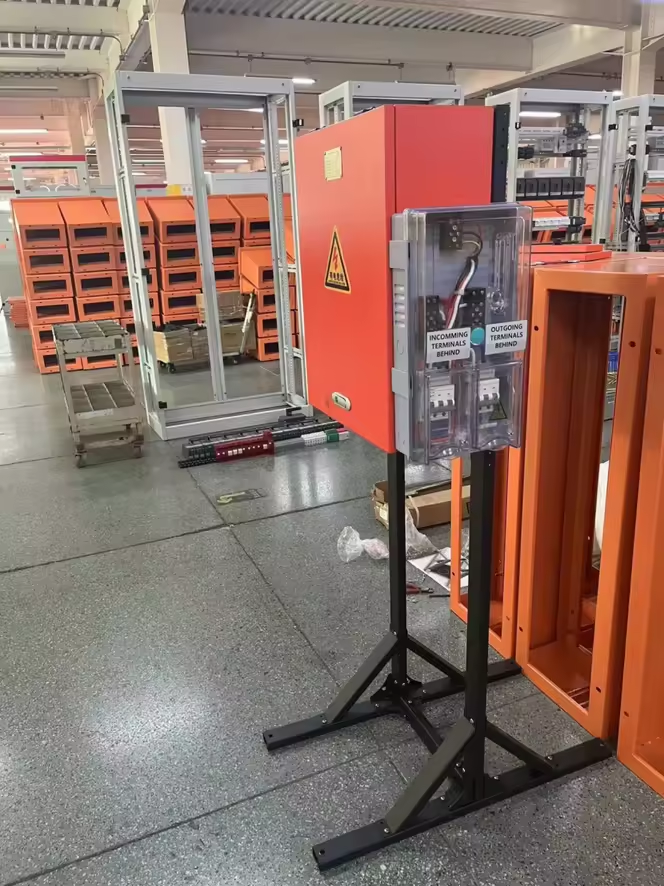
In Australia, temporary switchboards must comply with AS/NZS 61439.4, the mandatory standard for low-voltage switchgear and control gear assemblies used on construction sites. Since May 2021, this standard has replaced the old AS/NZS 3439 series, meaning any new installation or purchase must meet the updated requirements. Construction sites are harsh environments—exposed to dust, water, vibration, and impact—so the standard demands a lot from these units. For example, a temporary switchboard must be able to withstand mechanical impacts of around 6 joules, roughly equivalent to a solid object striking the enclosure with moderate force. The enclosure also needs a minimum ingress protection rating of IP44, ensuring it is protected against splashing water and solid objects larger than one millimetre. Beyond the physical build, the internal components—such as circuit breakers, residual current devices (RCDs), and earthing systems—must be robust and fully compliant.
Installation and use are governed by another key document: AS/NZS 3012, the standard for electrical installations on construction and demolition sites. This standard covers how and where temporary switchboards should be positioned, how they must be secured, and how they are to be maintained. It requires that all final sub-circuits be protected by RCDs with a rated residual current not exceeding 30 milliamps. In practical terms, this acts as a highly sensitive safety net, cutting power within milliseconds in the event of a fault.
One of the most important—and often overlooked—compliance changes involves RCD types. Since 30 April 2023, Type AC RCDs are no longer permitted in temporary switchboards. Instead, Type A RCDs are mandatory. While Type AC units detect only standard AC earth leakage, Type A units also detect pulsating DC residual currents. With the increasing use of modern equipment like variable speed drives, power tools with electronic controls, and LED lighting, pulsating DC leakage has become more common. Type A RCDs offer a higher level of protection suited to today's sites. Any switchboard still fitted with Type AC RCDs will likely fail a compliance inspection.
Physical construction and ongoing management are just as critical. Temporary switchboards must include cable anchorage points to prevent tension on terminations from loosening connections over time. All outlets should be factory-configured; modifying the board by adding sockets or altering internal wiring voids its compliance status. And it doesn't stop at installation. RCDs must be tested by a licensed electrician every 12 months. If the board supplies portable outlets or extension leads, those must undergo electrical testing every three months on site (or every 12 months in less demanding environments) and be tagged with a current test tag showing the date of inspection. Even brand-new equipment should be checked before first use.
For anyone purchasing or hiring a temporary switchboard, the safest approach is to look for clear evidence of compliance with AS/NZS 61439.4. Reputable manufacturers can provide type test reports that confirm the product has passed the required impact tests, temperature rise tests, and ingress protection assessments. Products carrying only CE marks or resembling compliant units but lacking proper certification are not legally permitted for use in Australia. If an incident occurs or a site is inspected, responsibility falls on the person in control of the electrical equipment—not the supplier.
This is where choosing the right partner makes a real difference. DSJ Electrical Co., Ltd. specialises in manufacturing distribution boards and transformers with a clear focus on the Australian market. Every product is developed and tested to meet Australian standards, backed by full compliance documentation. For site managers, contractors, and specifiers, working with a supplier who understands the local regulatory landscape helps ensure that what goes on-site is not only fit for purpose but legally compliant.
In short, temporary switchboards in Australia are far more than simple power boxes. They are a critical layer of electrical safety on site. Choosing compliant equipment, installing it correctly, and maintaining it according to the standards is not optional—it's a legal obligation and a fundamental responsibility to everyone on site. When it comes to electrical safety in Australian construction, there's no room for shortcuts.
For exclusive deals and latest offers, sign up by entering your email address below.



 +86 18513032986
 FLC Center, Chaoyang District, Beijing, China
Copyright © DSJ Electrical Co., Ltd. All Rights Reserved
Power Distribution Equipment & System Manufacturer