+86 18513032986


A Practical Guide to Canadian Electrical Panel Standards: CSA C22.2 Series
Admin 2026-06-04If you're an engineer designing, installing, or maintaining electrical equipment in Canada, understanding the right CSA standards is essential for compliance and safety. The backbone of Canada's electrical safety framework is the Canadian Electrical Code (CSA C22.1, Part I, currently the 26th edition – C22.1:2024). But when it comes to specific products like distribution panels, industrial control panels, and switchgear, you'll need to dive into the CSA C22.2 series.

This article focuses on three key standards – No. 29 (Panelboards), No. 286 (Industrial Control Panels), and No. 31 (Switchgear Assemblies). We'll explain how they differ, how they map to UL standards, and what you need to know about certification and provincial rules. With over 40 years of experience manufacturing UL- and CSA-certified electrical panels and transformers, DSJ Electrical Co., Ltd. brings practical, field-tested insights into working with the CSA C22.2 family.
The Regulatory Framework at a Glance
Canada uses a three‑tier system. At the base is CSA C22.1 – the general installation code covering wiring, grounding, working space, overcurrent protection, and more. Above that, the CSA C22.2 series provides product‑specific technical requirements (materials, construction, testing, marking). Finally, mandatory certification – every electrical product sold or installed in Canada must bear a mark from an accredited certification body such as CSA, cUL, cETL, or cBV. Provincial authorities (e.g., ESA in Ontario, RBQ in Québec) add local enforcement rules, but CSA C22.1 and C22.2 remain the technical foundation.
The Three Core Standards
CSA C22.2 No. 29 – Panelboards
Applies to panelboards and enclosed panelboards up to 600 V. Their job: distribute power to branch circuits and provide overcurrent protection (breakers or fuses). Typical uses: floor‑level distribution panels in commercial buildings, residential main panels. The construction is standardized – main bus, branch bus, and protective devices – with no control logic. Key specs to look at: SCCR (short‑circuit current rating), number of branch spaces, and bus capacity. Note: No. 29 explicitly excludes control panels.
CSA C22.2 No. 286 – Industrial Control Panels
Applies up to 1500 V, for controlling motors, heaters, lighting, and other loads (starting, stopping, speed control, protection). Typical examples: motor control center (MCC) units, PLC panels, VFD cabinets, HVAC control panels. What defines No. 286? Control logic – the panel uses contactors, relays, PLCs, timers, or drives to change load states based on external signals (sensors, pushbuttons, higher‑level systems). This standard excludes ordinary panelboards (No. 29) and medium‑voltage switchgear (No. 31).
CSA C22.2 No. 31 – Switchgear Assemblies
Applies up to 46 kV, for generation, transmission, distribution, and circuit protection. Typical applications: medium‑voltage switchgear (metal‑enclosed), main incoming sections, bus tie compartments. No. 31 gear is built for extreme short‑circuit withstand capability – heavy, rugged, and large. When you go above 600 V (e.g., 4160 V, 13.8 kV), No. 31 is your standard. Even below 600 V, if the assembly acts as the main service entrance with very high fault ratings, you may also reference No. 31 or its UL counterparts.
Other relevant standards:
- CSA C22.2 No. 14 – covers individual industrial control devices (contactors, relays, pushbutton stations). Think of it as the "component" standard; No. 286 is the "system" standard that assembles those parts.
- CSA C22.2 No. 60947 series – the Canadian adoption of IEC 60947. It covers low‑voltage switchgear and controlgear (circuit‑breakers, switches, combination starters). These devices are often integrated into panelboards or control panels.
How to Tell No. 29 and No. 286 Apart – A Practical Rule
Both can come in metal enclosures and contain breakers, so confusion is common. The key is primary function.
- Static power distribution only – takes one or more incoming supplies, splits into branch circuits, each protected only by a breaker or fuse. No control logic (no PLC, contactor coils, relays, VFDs). → No. 29 (e.g., a lighting panel).
- Contains control logic – includes contactors, relays, PLCs, timers, drives, and changes load states (start/stop, speed, sequence) based on external signals. → No. 286.
Simple test: Does the device need an external command (from a button, sensor, or computer) to change what the load is doing? If yes, it's No. 286. If it just sits there distributing power, it's No. 29.
Where No. 31 Comes In
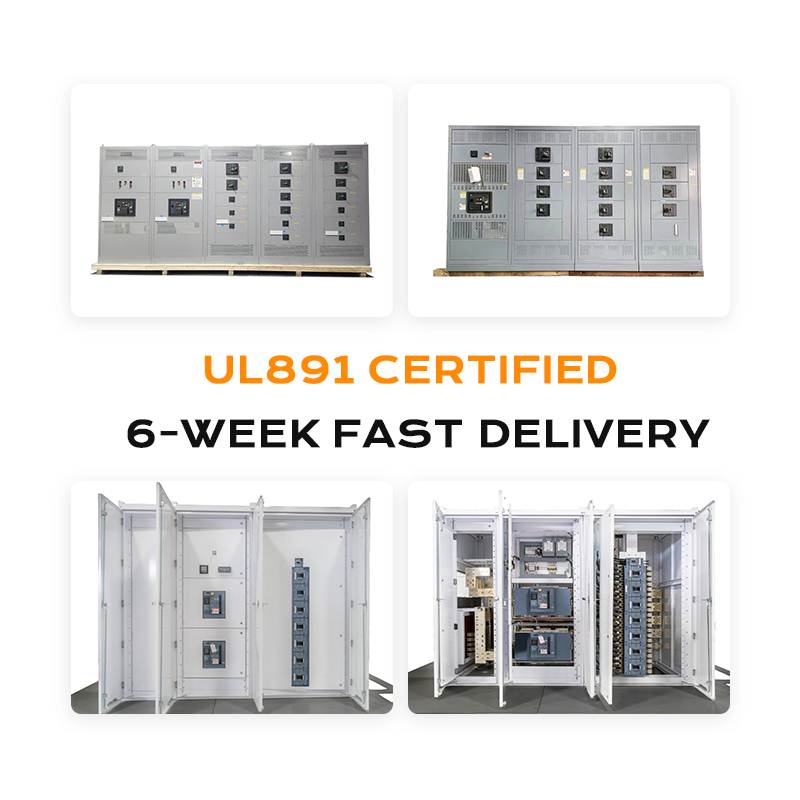
Once you exceed 600 V and enter medium‑voltage territory (2400 V, 4160 V, 13.8 kV, etc.), No. 31 is mandatory. But even at low voltage, if the gear is designed as the main switchboard for a large facility with very high fault current ratings, you might need to reference No. 31 or its UL equivalents (e.g., UL 891). When in doubt, look at the short‑circuit rating and whether the assembly uses drawout breakers, arc‑resistant construction, or other features typical of switchgear.
Mapping CSA to UL Standards
Many engineers are already familiar with UL. Here's how the CSA C22.2 standards line up:
|
CSA Standard |
Corresponds to |
|
C22.2 No. 29 |
UL 67 (Panelboards) |
|
C22.2 No. 286 |
UL 508A (Industrial Control Panels) – technically very close, making cULus joint certification straightforward |
|
C22.2 No. 31 |
UL 891 (Switchboards) or UL 1558 (Metal-Enclosed Low-Voltage Switchgear) |
|
C22.2 No. 14 |
UL 508 (Industrial Control Equipment) |
|
C22.2 No. 60947 |
UL 60947 series – fully harmonized |
If you already have UL certification, converting to cUL (for Canada) usually requires only a few extra tests for Canadian differences – for example, grounding and fault‑current marking. DSJ Electrical Co., Ltd. has been producing equipment that meets both UL and CSA requirements for over 40 years, and their experience confirms that these mappings are both practical and reliable for real‑world projects.
Certification and Provincial Notes
Meeting the technical standard is not enough – you must also get the product certified by an accredited agency (CSA, cUL, cETL, cBV, etc.) and affix the mark. Provincial inspectors will reject uncertified gear. Also watch for local rules:
- Ontario: ESA enforces the code. For unique devices without standard certification, a Field Evaluation by ESA may be an alternative.
- Québec: All labels, warning signs, and manuals must be in French (or bilingual English/French).
- British Columbia: Electrical installation work must be done by a licensed electrician (BC Safety Authority).
Build certification time and costs into your project schedule – don't leave it to the last minute.
Getting the standard right from the start saves you from redesign, certification delays, and provincial inspection headaches. As DSJ Electrical Co., Ltd. has demonstrated over four decades, a deep, practical understanding of CSA certification is what makes products reliable and compliant in the Canadian market. When in doubt, reach out to your certification body early – they can confirm the current edition and any special requirements for your product type.
For exclusive deals and latest offers, sign up by entering your email address below.



 +86 18513032986
 FLC Center, Chaoyang District, Beijing, China
Copyright © DSJ Electrical Co., Ltd. All Rights Reserved
Power Distribution Equipment & System Manufacturer