+86 18513032986


AS/NZS 3000 Compliance: DSJ’s Professional Manufacturing & Client Service for Australian Switchboards
Admin 2026-06-13AS/NZS 3000, widely known as the Australian and New Zealand Wiring Rules, is the fundamental legal and technical standard governing all electrical installation practices across Australia and New Zealand. Complementary to the equipment manufacturing standard AS/NZS 61439, which regulates switchboard design and structural performance, AS/NZS 3000 focuses on on-site installation safety, internal wiring specifications, component layout, permanent labeling, and operational accessibility. It serves as the final safety gate to prevent electric shock, short circuits, and electrical fire hazards, making full compliance a mandatory prerequisite for all low-voltage switchboards used in Australian commercial, industrial, and residential projects. As an experienced manufacturer specializing in Australian-standard electrical equipment, DSJ Electrical strictly implements AS/NZS 3000 requirements throughout design, production, wiring, and labeling, delivering fully compliant switchboards through standardized processes and close collaboration with local clients.
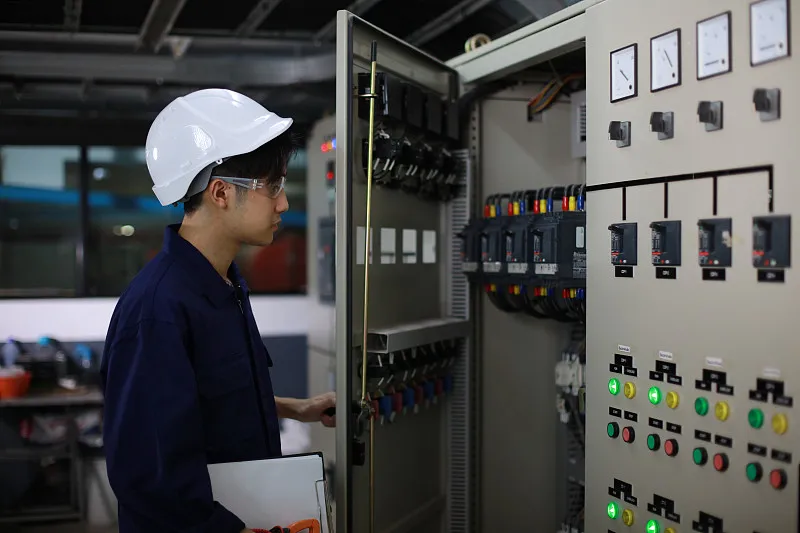
AS/NZS 3000:2018, the latest authoritative version, clarifies rigorous and detailed specifications for switchboard internal configuration, wiring discipline, and identification marking. Unlike general international electrical standards, it features region-specific safety rules adapted to Australia’s climatic conditions, site operation habits, and local electrical inspection requirements. The standard mandates unified norms covering minimum internal working clearances, earthing system layout, cable routing discipline, circuit classification, and permanent marking identification. For large-capacity switchboards above 800A, it further enhances requirements for internal operation space, access pathways, and equipment arrangement to ensure safe maintenance and emergency operation. All these regulations define the core manufacturing and installation criteria for Australian-qualified switchboards, eliminating irregular wiring and non-standard structural design.
Labeling standardization is one of the most intuitive and critical requirements of AS/NZS 3000. The standard stipulates that all circuits, neutral wires, earthing systems, and protective devices must be equipped with durable, permanent, and clearly identifiable markings. Each outgoing circuit needs an exclusive number and functional label to indicate load type, circuit purpose, and corresponding protection parameters. Neutral conductors connected to multiple circuits must be individually marked to match associated active circuits, avoiding misconnection risks during installation and maintenance. Meanwhile, main switches, RCD protection modules, busbar systems, and emergency isolation devices require dedicated warning and identification signs. DSJ fully adheres to these rules, adopting weather-resistant, non-fading industrial labels that comply with Australian specifications. Every marking is unified, standardized, and permanently fixed, enabling local electricians to quickly identify circuit functions and meet official inspection requirements.
In terms of internal structural design, DSJ strictly follows AS/NZS 3000 spatial and safety specifications. The standard requires standardized zoning of live parts, busbar areas, and wiring cavities inside switchboards, with mandatory safe clearances to prevent accidental contact and arc faults. DSJ optimizes internal layouts based on Australian site maintenance habits, reserving sufficient front operation space and isolating high-voltage live components with qualified protective baffles to meet IP protection and anti-shock requirements specified in AS/NZS 3000. For industrial and commercial large-scale switchboards, DSJ strictly implements enhanced space layout rules for high-current equipment, ensuring compliance with access and egress standards for switchroom operation. All internal mounting brackets, busbar fixing structures, and component installation positions are designed and arranged in line with local wiring rules, achieving structural safety and operational practicability.
Internal wiring compliance is the core essence of AS/NZS 3000 implementation. The standard enforces strict regulations on cable model selection, wiring routing, wire harness fixing, earthing connection, and circuit protection matching. It requires neat and classified wiring separation for power circuits, control circuits, and signal circuits, with standardized cable bending radii and tension control to prevent wire insulation damage. The earthing system must adopt independent standardized busbars, with reliable and consistent earthing connections for all conductive enclosures and metal components to ensure effective leakage protection. DSJ’s professional wiring team implements unified Australian wiring processes: all cables are routed neatly, fixed with standard wire clips, classified and bundled scientifically, with no disorderly crossing or redundant wiring. Each wire end is crimped and connected in a standardized manner, and all protective device configurations strictly match AS/NZS 3000’s overcurrent, leakage, and short-circuit protection requirements.
DSJ’s high compliance quality stems from in-depth standard accumulation and full-cycle client collaborative services. In the early project stage, DSJ communicates deeply with Australian clients to confirm project scenarios, load parameters, and local inspection requirements, combining AS/NZS 3000 and AS/NZS 61439 dual standards to customize design solutions. We provide clients with detailed 3D drawings and internal wiring schematic diagrams for pre-confirmation, ensuring the overall scheme meets local rules. During production, we conduct multi-round inspections on labeling, structure, and wiring to eliminate non-standard details. After drawing confirmation, we actively respond to client modification feedback and support flexible adjustment cycles to adapt to project progress. Before delivery, we complete full insulation testing, loop impedance testing, and circuit verification, and provide complete compliance documents to assist clients with on-site installation and official acceptance.
In conclusion, AS/NZS 3000 is the core benchmark for judging whether switchboards adapt to Australian on-site electrical environments. DSJ integrates standard requirements into every production detail from labeling, internal structure to wiring technology. With professional technical capabilities, standardized manufacturing processes, and customer-oriented collaborative services, we consistently deliver safe, stable, and fully compliant switchboard products for Australian clients, ensuring smooth project delivery and long-term reliable operation of electrical systems.
For exclusive deals and latest offers, sign up by entering your email address below.



 +86 18513032986
 FLC Center, Chaoyang District, Beijing, China
Copyright © DSJ Electrical Co., Ltd. All Rights Reserved
Power Distribution Equipment & System Manufacturer