+86 18513032986


How Many Watts on a 20 Amp Circuit Breaker? Complete Guide
Admin 2026-04-27Content
- 1 How Many Watts Does a 20 Amp Circuit Breaker Support?
- 2 The 80% Rule: Why You Should Not Use All 2,400 Watts
- 3 20 Amp Circuit Breaker Wattage at Different Voltages
- 4 Common Appliances and How They Load a 20 Amp Circuit
- 5 Inrush Current: The Hidden Wattage Spike That Trips Breakers
- 6 Wiring Requirements for a 20 Amp Circuit Breaker
- 7 20 Amp vs 15 Amp Circuit Breaker: When the Difference Matters
- 8 Where 20 Amp Circuits Are Typically Used in a Home
- 9 Why Your 20 Amp Circuit Breaker Keeps Tripping
- 10 How to Calculate the Load on Your 20 Amp Circuit
- 11 Types of 20 Amp Circuit Breakers and Their Differences
- 12 Practical Safety Tips for Managing Wattage on a 20 Amp Circuit
How Many Watts Does a 20 Amp Circuit Breaker Support?
If you need a direct answer: a 20 amp circuit breaker handles 2,400 watts on a standard 120V circuit. For a 240V circuit — common for heavy appliances like dryers or large air conditioners — that same 20 amp breaker supports 4,800 watts. These are the raw theoretical maximums. In real-world electrical work, the number you actually plan around is lower, and understanding why matters more than memorizing the peak figure.
The calculation behind these numbers is straightforward. Electrical power in watts equals amperage multiplied by voltage: W = A × V. Plug in 20 amps and 120 volts and you get 2,400 watts. Plug in 240 volts and you get 4,800 watts. Every time someone asks "how many watts on a 20 amp circuit breaker," this formula is the engine behind the answer.
But the formula alone does not tell you what is safe to run. A circuit breaker is a protection device — it trips when current exceeds its rating to prevent wiring from overheating. Knowing the ceiling is just the starting point. Knowing the safe working range is what actually keeps your home's electrical system from causing problems.
The 80% Rule: Why You Should Not Use All 2,400 Watts
The National Electrical Code (NEC) establishes what is known as the 80% rule. For any load that runs continuously — defined as three hours or more without interruption — a circuit should only be loaded to 80% of its rated capacity. For a 20 amp breaker on a 120V circuit, that math works out as follows:
- Maximum theoretical capacity: 2,400 watts
- Safe continuous load limit (80%): 1,920 watts
- Safe continuous amperage: 16 amps
The reasoning is thermal. When a circuit runs near its maximum capacity for extended periods, internal components — especially the wiring insulation — absorb heat continuously. The bimetallic strip inside a thermal-magnetic circuit breaker responds to temperature accumulation, not just instantaneous current. Running at 100% for three hours puts gradual stress on both the breaker mechanism and the wire itself. The 80% rule creates a thermal buffer that prevents slow-cook overheating.
Here is a concrete example of how this plays out: a 1,500-watt space heater running all afternoon is a continuous load. Add a 500-watt desk lamp to the same circuit and you are at 2,000 watts — above the 1,920-watt continuous limit, even though you are still under the 2,400-watt peak. That scenario violates the NEC guideline even though the breaker might not trip immediately. Over time, it degrades the circuit and creates a fire risk.
Non-continuous loads — things you use for a few minutes at a time, like a blender or a toaster — can technically approach the full 2,400 watts. But even for short-duration devices, experienced electricians recommend maintaining the 80% margin as a general habit. It leaves room for inrush current spikes and gives the circuit breathing room when multiple devices are used together.
20 Amp Circuit Breaker Wattage at Different Voltages
Not all 20 amp circuits are the same voltage, and the voltage dramatically changes the wattage capacity. Here is a clear comparison of the three voltage levels you are most likely to encounter:
| Voltage | Max Wattage (100%) | Safe Continuous Limit (80%) | Typical Use Case |
|---|---|---|---|
| 120V | 2,400W | 1,920W | Kitchen outlets, bathrooms, garages |
| 220V | 4,400W | 3,520W | International residential, some shop equipment |
| 240V | 4,800W | 3,840W | Window AC units, large power tools, some dryers |
In North American homes, most general-purpose receptacles are on 120V circuits. The 240V version of a 20 amp circuit typically appears for specific dedicated appliances. A double-pole 20 amp breaker — which occupies two slots in the electrical panel — is usually what you see protecting a 240V line. Single-pole 20 amp breakers handle 120V circuits and are the most common type found in residential panels.
One important clarification: when people search for "how many watts on a 20 amp circuit breaker," many results mix 120V and 240V answers without clearly distinguishing between them. If someone tells you a 20 amp breaker handles 4,800 watts, they are technically correct — but only for a 240V circuit, which is not the standard setup for most household outlets.
Common Appliances and How They Load a 20 Amp Circuit
Understanding watts on a 20 amp circuit becomes much more useful when you match it against real appliance data. Below is a reference list of typical household and workshop devices and the wattage they draw:
| Appliance | Typical Wattage | Load Type | Amps Drawn (at 120V) |
|---|---|---|---|
| Microwave | 1,000–1,500W | Non-continuous | 8.3–12.5A |
| Toaster / Toaster Oven | 800–1,500W | Non-continuous | 6.7–12.5A |
| Space Heater | 1,500W | Continuous | 12.5A |
| Hair Dryer | 1,200–1,800W | Non-continuous | 10–15A |
| Coffee Maker | 800–1,200W | Non-continuous | 6.7–10A |
| Refrigerator (running) | 150–700W | Continuous | 1.25–5.8A |
| Refrigerator (startup surge) | Up to 2,000W | Inrush spike | Up to 16.7A |
| Air Fryer | 1,500–2,000W | Non-continuous | 12.5–16.7A |
| Blender | 300–1,000W | Non-continuous | 2.5–8.3A |
| Table Saw / Power Tool | 1,200–1,800W | Non-continuous | 10–15A |
The kitchen is where most 20 amp circuit overloads happen. A 1,000W microwave and a 1,200W toaster running simultaneously draw 2,200 watts — still under the 2,400W ceiling. But if you also run a 1,000W blender at the same moment, the total jumps to 3,200 watts, which is well over the breaker's limit and will trip it immediately.
The refrigerator is a special case. Its steady running wattage looks harmless — often only 150 to 700 watts. But when the compressor motor starts up, it can briefly surge to 2,000 watts. If the circuit is already loaded near its limit when that startup spike hits, the breaker trips. This is why it is generally a bad idea to share a refrigerator circuit with other high-draw appliances.
Inrush Current: The Hidden Wattage Spike That Trips Breakers
Motors do not start smoothly. When a compressor or motor-driven appliance powers up, it draws a large burst of current for a fraction of a second — sometimes three to eight times its normal running current. This is called inrush current, and it is the reason a circuit that seems fine under steady use can still trip the breaker at startup.
A refrigerator pulling 700 watts at steady state draws about 5.8 amps. But its startup surge can briefly reach 2,000 watts — equivalent to 16.7 amps on a 120V circuit. That is nearly the full 20-amp rating just from one appliance at startup. An air conditioner compressor behaves the same way. So does a workshop air compressor or table saw.
When planning what to run on a 20 amp circuit breaker, inrush current demands caution with motor-driven equipment. The general practice is to treat the startup wattage — not just the running wattage — as part of your circuit planning. If a device is rated at 1,000 watts running but surges to 1,800 watts at startup, use 1,800 watts as your planning figure for that device.
For workshop applications, this is especially relevant. Air compressors, table saws, and chop saws all have substantial inrush current. Plugging a table saw on the same 20 amp circuit as a shop vac — even if both are within wattage limits individually — can cause nuisance tripping the moment both motors try to start close together.
Wiring Requirements for a 20 Amp Circuit Breaker
The circuit breaker does not work alone. The wires running from the panel to the outlets are equally critical. A 20 amp circuit breaker must be paired with wire rated to carry 20 amps — specifically, 12-gauge (12 AWG) wire. Using thinner 14-gauge wire with a 20 amp breaker is a serious fire hazard.
Here is the logic: a circuit breaker protects the wiring, not the devices plugged into it. Its job is to trip when current reaches a level that would overheat the wire. If a 20 amp breaker is installed on 14-gauge wire — which is rated only for 15 amps — the wire can overheat and potentially start a fire before the breaker ever reaches its trip threshold. The breaker would allow 20 amps through wire that cannot safely handle it. This mismatch between breaker rating and wire gauge is one of the most dangerous DIY electrical errors.
Quick identification guide for residential wiring:
- 14 AWG wire — suitable for 15 amp circuits only, often has white sheathing
- 12 AWG wire — required for 20 amp circuits, often has yellow sheathing
- 10 AWG wire — used for 30 amp circuits (dryers, some HVAC equipment)
Outlet compatibility also matters. A 20 amp outlet has a T-shaped neutral slot — the left slot has a small horizontal notch branching off the vertical opening. This is designed so that high-power devices with matching T-shaped plugs can only be inserted into the correct outlet type. Standard two-prong and three-prong plugs fit both 15 amp and 20 amp outlets, but the T-slot prevents a high-power device from being accidentally connected to an underpowered circuit.
20 Amp vs 15 Amp Circuit Breaker: When the Difference Matters
A 15 amp circuit breaker on a 120V circuit handles a maximum of 1,800 watts, with a safe continuous limit of 1,440 watts. Compared to a 20 amp circuit's 2,400 watts (or 1,920 watts continuous), the difference looks modest on paper — but in practice, it is the gap between a kitchen that functions smoothly and one that trips the breaker every time the toaster and microwave run together.
| Feature | 15 Amp Breaker | 20 Amp Breaker |
|---|---|---|
| Max wattage (120V) | 1,800W | 2,400W |
| Safe continuous limit | 1,440W | 1,920W |
| Required wire gauge | 14 AWG | 12 AWG |
| Typical outlet slots | Two vertical slots + ground | T-shaped neutral slot + ground |
| Common locations | Bedrooms, living rooms, hallways | Kitchens, bathrooms, garages, workshops |
Modern building codes in the US typically require 20 amp circuits for kitchen countertop outlets, bathroom outlets, laundry areas, and garage receptacles. These are the areas where high-draw appliances are most likely to be used. Living rooms and bedrooms, where lighting and entertainment devices are the primary loads, generally remain on 15 amp circuits — and that is sufficient for the typical loads in those spaces.
If you are doing a renovation or adding circuits, choosing 20 amp rated wiring and breakers for any room where appliances might be used gives you more flexibility. The material cost difference between 14 AWG and 12 AWG wire is minimal during a new installation, and the extra capacity is worth having.
Where 20 Amp Circuits Are Typically Used in a Home
Not every room in a house needs 20 amp capacity, but certain areas are specifically designed around it. Understanding where these circuits are standard helps explain why most people encounter the "20 amp circuit breaker wattage" question when dealing with kitchen or workshop electrical problems.
Kitchen and Dining Areas
The NEC requires a minimum of two small-appliance branch circuits, each rated at 20 amps, for kitchen countertop outlets. These circuits are specifically for countertop receptacles only — refrigerators, dishwashers, and garbage disposals are meant to be on separate dedicated circuits. With a microwave, coffee maker, and toaster all sharing one 20 amp line, reaching the circuit's limit is not difficult, which is why the NEC mandates at least two of them.
Bathrooms
Hair dryers and curling irons have become increasingly powerful over the years — many current models draw 1,500 to 1,800 watts. A 15 amp circuit can technically handle a single 1,800-watt hair dryer at its limit, but there is almost no margin left. Bathroom circuits are required to be 20 amps to accommodate these loads, and they must also be GFCI-protected to guard against electrocution near water.
Garages and Workshops
Power tools, air compressors, and shop equipment regularly demand 12 to 15 amps at full load, with startup spikes higher than that. Garages and workshops are almost always wired on 20 amp circuits for this reason. For dedicated heavy equipment — a dust collector, a large air compressor, or a table saw — a dedicated 20 amp circuit for that single tool alone is the correct approach, rather than sharing the line with other devices.
Laundry Rooms
Washing machines — particularly models with heated wash cycles — can draw 1,200 to 1,500 watts in operation. They are typically placed on a dedicated 20 amp, 120V circuit. Electric dryers, however, require a 240V circuit entirely, usually on a 30 amp double-pole breaker, because their heating elements alone consume 4,000 to 5,000 watts.
Why Your 20 Amp Circuit Breaker Keeps Tripping
A tripping circuit breaker is doing exactly what it is supposed to do — cutting power to protect the wiring from overheating. Repeatedly resetting it without addressing the underlying problem does not fix anything. Here are the main reasons a 20 amp breaker trips, in order of how commonly they occur:
Overloaded Circuit
This is the most frequent cause. Too many devices running simultaneously push the total wattage past the breaker's rating. The fix is to move high-wattage appliances to different circuits. Add up the watts on everything plugged into the circuit and compare it to your 2,400-watt limit. If you are at or above that number, something needs to move.
Short Circuit
If the breaker trips instantly when you flip it — sometimes with a popping sound or a flash — that suggests a short circuit rather than a simple overload. A short circuit occurs when a hot wire contacts a neutral or ground wire, causing a sudden surge in current that trips the breaker's magnetic mechanism rather than its thermal one. Leave the breaker off and call a licensed electrician. Do not keep resetting it.
Ground Fault
In wet areas like bathrooms and kitchens, GFCI-protected circuits can trip when current leaks to ground — even at levels far below the 20-amp threshold. A GFCI detects imbalances as small as 5 milliamps. These trips are safety mechanisms designed to prevent electrocution near water. If the GFCI keeps tripping on a particular outlet, there may be a wiring fault or a damaged appliance on that circuit.
Worn-Out or Aging Breaker
Circuit breakers have a typical service life of 25 to 40 years. Older breakers — or ones that have been tripped and reset many times — can become thermally sensitive and trip at lower-than-rated loads. If your breaker trips at loads well under 2,400 watts and there is no apparent overload or short, the breaker itself may need replacement. This is a job for a licensed electrician, particularly if the issue involves the panel itself.
How to Calculate the Load on Your 20 Amp Circuit
Figuring out how much you are actually loading a 20 amp circuit is a straightforward process. Follow these steps:
- Identify every device that could be running simultaneously on the circuit.
- Find the wattage for each device — usually printed on a label on the device itself or listed in the owner's manual.
- Add the wattages together. If any device has a motor, use its startup wattage, not just its running wattage.
- Compare the total to your circuit's safe limit: 1,920 watts for continuous loads, 2,400 watts for short-duration use.
- If you are over the limit, redistribute high-wattage devices to other circuits or schedule their use at different times.
If a device label shows amps instead of watts, convert using the formula: Watts = Amps × Volts. A device showing 12.5 amps at 120V draws 1,500 watts. Conversely, if you know wattage and want the amp draw: Amps = Watts ÷ Volts. A 1,000-watt microwave on a 120V circuit draws approximately 8.3 amps.
For serious load planning — such as adding outlets to a workshop or planning a kitchen renovation — a plug-in watt meter (also called a kill-a-watt meter) gives you real measured consumption rather than nameplate estimates. Nameplate ratings often reflect maximum draw; actual consumption is frequently lower, giving you more circuit headroom than the spec sheet suggests.
Types of 20 Amp Circuit Breakers and Their Differences
Not all 20 amp circuit breakers are identical in function. The wattage capacity stays the same, but the protection mechanisms differ based on where the circuit is installed and what the code requires for that location.
Standard Thermal-Magnetic Breaker
The most common type. It uses a bimetallic strip that bends under sustained heat (for overload protection) combined with an electromagnet that trips instantly under short-circuit conditions. This is the type found in most residential panels for general-purpose circuits in bedrooms, living rooms, and hallways.
GFCI Breaker
A ground fault circuit interrupter breaker adds protection against electrocution in addition to the standard overload protection. Required by the NEC in bathrooms, kitchens, garages, outdoor areas, crawl spaces, and anywhere receptacles are near water or wet surfaces. A GFCI breaker can serve the entire circuit from the panel, as an alternative to installing individual GFCI outlets at each receptacle.
AFCI Breaker
An arc fault circuit interrupter detects dangerous electrical arcing — the kind that can ignite insulation and cause fires inside walls before the current ever reaches standard trip levels. The NEC now requires AFCI protection in most living areas of new construction and renovations. AFCI breakers are more sensitive than standard types, which is why they occasionally trip on devices with poor power supplies or older motors.
Dual-Function AFCI/GFCI Breaker
Combines both protection types in a single panel breaker. Required in kitchens and certain other areas under recent NEC editions. These are the most protective option and are increasingly the default choice for residential renovation work to meet current code requirements without needing separate protection devices at each outlet.
Double-Pole 20 Amp Breaker
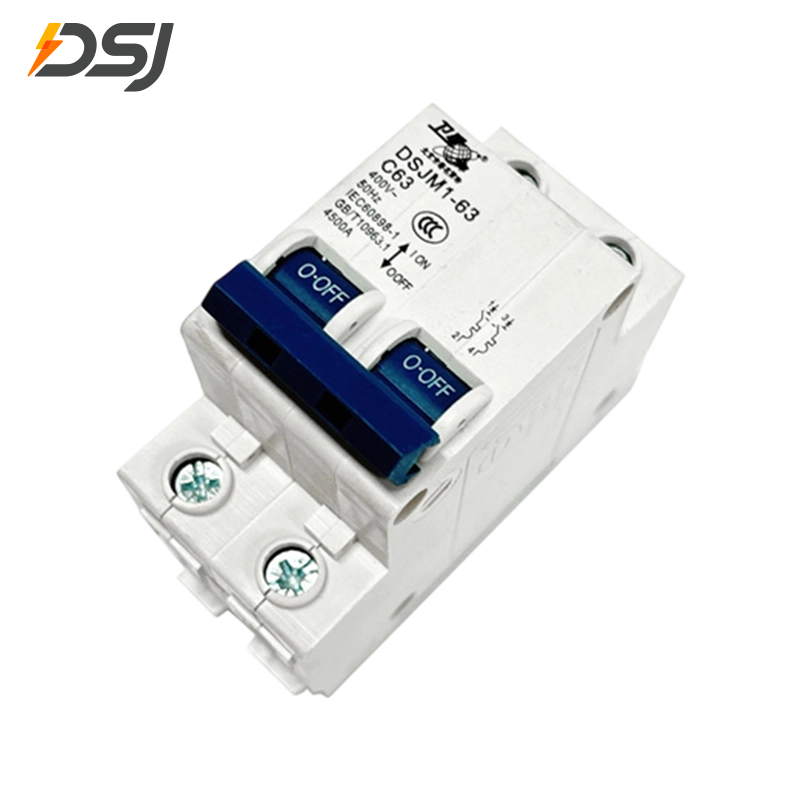
Occupies two slots in the panel and supplies a 240V circuit. While less common for general receptacles, this configuration is used for specific appliances like large window air conditioners, certain power tools, and workshop equipment that runs on 240V. The wattage capacity of a double-pole 20 amp breaker is 4,800 watts, with a safe continuous limit of 3,840 watts.
Practical Safety Tips for Managing Wattage on a 20 Amp Circuit
Knowing the numbers is useful. Applying that knowledge in everyday situations is what actually keeps circuits operating safely. These practices make a tangible difference:
- Never use extension cords as permanent wiring. Extension cords are rated for lower currents than permanent wiring and are not designed for sustained high-wattage loads. A space heater or air conditioner running through an undersized extension cord can overheat the cord even if the breaker never trips.
- Do not piggyback high-wattage appliances on a single outlet via power strips unless the strip is specifically rated for that load. Most basic power strips are not designed for 1,500-watt or higher loads.
- Use energy-efficient appliances where practical. A 900-watt microwave instead of a 1,200-watt model leaves 300 extra watts of circuit capacity — enough to run a coffee maker simultaneously without approaching limits.
- Label your electrical panel clearly. Knowing which breaker protects which circuit makes load calculation much easier and helps you distribute appliances intelligently across multiple circuits.
- For high-draw single appliances — electric vehicle chargers, large air conditioners, electric water heaters — install a dedicated circuit. These devices should not share their circuit with anything else.
- If a breaker trips repeatedly, investigate the cause before resetting it again. Repeatedly resetting a tripping breaker without addressing the underlying issue can damage the breaker's internal mechanism over time, leading to a breaker that no longer trips reliably — the opposite of safe.
For exclusive deals and latest offers, sign up by entering your email address below.




 +86 18513032986
 FLC Center, Chaoyang District, Beijing, China
Copyright © DSJ Electrical Co., Ltd. All Rights Reserved
Power Distribution Equipment & System Manufacturer