+86 18513032986


How to Choose the Right UL 891 Switchboard?
Admin 2026-05-07Content
- 1 Understanding UL 891 Switchboards
- 2 Determine the Required Current Rating
- 3 Check the Short-Circuit Rating
- 4 Evaluate the Breaker Configuration
- 5 Consider Busbar Design and Material
- 6 Select the Appropriate Enclosure Type
- 7 Ensure Compliance with Electrical Codes
- 8 Consider Future Expansion and Maintenance
- 9 Partner with an Experienced Manufacturer
- 10 Final Thoughts
Selecting the correct UL 891 switchboard is a key decision when designing a reliable low-voltage power distribution system. For engineers, EPC contractors, and procurement teams working on projects in North America, compliance with UL standards is not just a preference—it is often a requirement for safety approval, insurance acceptance, and project commissioning.
A well-designed switchboard ensures stable power distribution, system protection, and long-term operational safety. However, not all UL 891 switchboards are configured the same. Understanding the main selection factors will help you choose equipment that meets both technical and project requirements.

Understanding UL 891 Switchboards
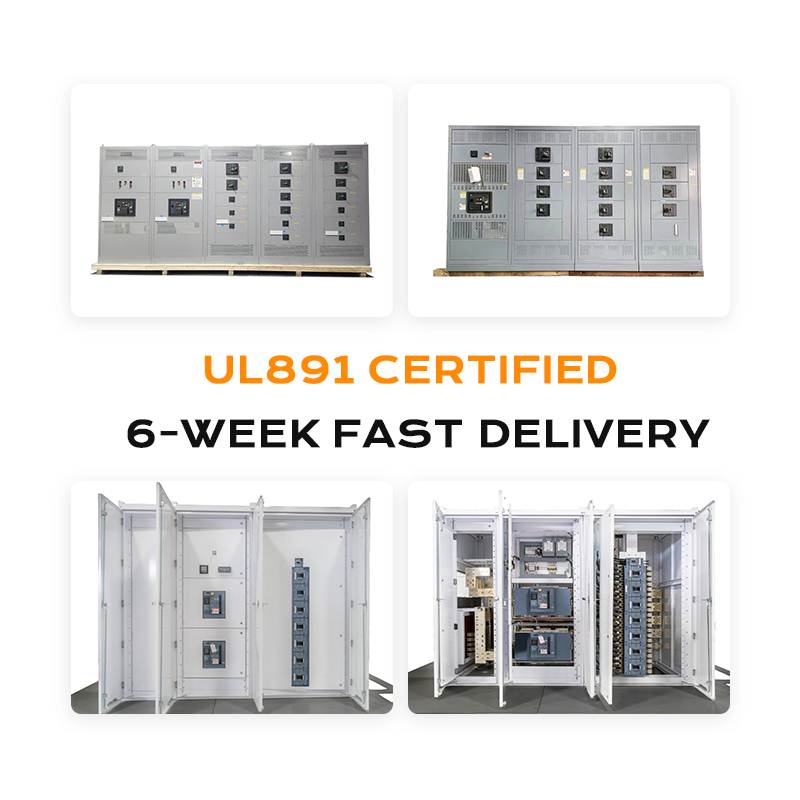
A UL 891 switchboard is a type of dead-front low-voltage distribution equipment used to distribute electrical power in commercial and industrial facilities. The “dead-front” design means that live parts are not exposed to the operator, improving safety during operation and maintenance.
These switchboards are widely used in buildings such as:
Commercial complexes
Hospitals and healthcare facilities
Data centers
Manufacturing plants
Airports and transportation hubs
The standard defines requirements for construction, performance, and safety testing to ensure reliable operation within electrical distribution systems.
Determine the Required Current Rating
One of the first parameters to consider is the continuous current rating of the switchboard.
UL 891 switchboards typically cover a wide current range, commonly from 800A up to 6000A depending on system design. Engineers should determine the required rating based on the facility’s load calculation and future expansion needs.
When selecting a switchboard, consider:
Maximum demand load
Load diversity factors
Future capacity requirements
Distribution architecture
Oversizing may increase project costs, while undersizing can lead to overheating or system limitations. Proper load analysis is therefore essential in the early design stage.
Check the Short-Circuit Rating
Another critical factor is the short-circuit current rating (SCCR). The switchboard must be capable of safely withstanding fault currents that may occur within the electrical system.
Typical UL 891 switchboards are designed with short-circuit ratings such as:
35 kA
50 kA
65 kA
100 kA
The required rating depends on the available fault current from the upstream transformer or utility supply. Electrical engineers usually perform a short-circuit analysis during system design to determine the necessary SCCR.
Selecting a switchboard with insufficient fault capacity can lead to equipment damage or safety hazards during electrical faults.
Evaluate the Breaker Configuration
UL 891 switchboards commonly use molded case circuit breakers (MCCBs) for feeder and branch protection. These breakers provide reliable overcurrent protection while maintaining a compact equipment structure.
When planning breaker configuration, it is important to consider:
Main breaker vs. main lug only design
Number of feeder breakers
Adjustable protection settings
Coordination with downstream devices
Proper coordination ensures that faults are cleared selectively, minimizing disruption to the rest of the system.
Consider Busbar Design and Material
The busbar system is the backbone of a switchboard. It distributes electrical power between incoming and outgoing circuits.
Key busbar considerations include:
Copper vs. aluminum conductors
Temperature rise limits
Plating options
Mechanical strength
Copper busbars are often preferred for their superior conductivity and durability, especially in high-current applications. The design should also allow adequate spacing and insulation to maintain safe operating temperatures.
Select the Appropriate Enclosure Type
Environmental conditions play a major role in equipment selection. Switchboards may be installed in indoor electrical rooms, industrial environments, or outdoor utility areas.
Common enclosure classifications include:
Indoor enclosures for controlled environments
Weather-resistant outdoor enclosures
Dust- or moisture-protected designs
Proper enclosure selection helps protect electrical components from environmental factors and extends equipment service life.
Ensure Compliance with Electrical Codes
In addition to UL certification, electrical distribution equipment must also comply with installation codes such as the National Electrical Code. These codes define requirements for installation, grounding, clearances, and protection systems.
For EPC contractors and project developers, choosing equipment that meets both UL standards and electrical code requirements helps avoid delays during inspection and project approval.
Consider Future Expansion and Maintenance
Power distribution systems often evolve as facilities expand. A well-planned switchboard design should allow future modifications without major system disruptions.
Features that support long-term flexibility include:
Additional feeder spaces
Modular section design
Accessible wiring areas
Clear labeling and documentation
Maintenance accessibility is equally important. A properly designed switchboard allows technicians to perform inspections, testing, and servicing efficiently.
Partner with an Experienced Manufacturer
Beyond technical specifications, the manufacturer’s engineering capability and quality control processes also influence the long-term performance of the switchboard.
An experienced supplier can support projects by providing:
Custom engineering design
Application guidance for different industries
Compliance documentation
Reliable production and testing processes
These factors are especially important for large projects where electrical distribution equipment must integrate seamlessly with the overall power system.
Final Thoughts
Choosing the right UL 891 switchboard requires careful evaluation of electrical load requirements, fault levels, protection configuration, and installation conditions. For engineers, EPC contractors, and procurement teams, understanding these key considerations helps ensure that the selected equipment provides both safety and long-term operational reliability.
A well-designed switchboard is more than a distribution panel—it is the backbone of a facility’s electrical infrastructure. Selecting the right solution from the beginning helps reduce risks, improve efficiency, and support the stable operation of modern power systems.
For exclusive deals and latest offers, sign up by entering your email address below.



 +86 18513032986
 FLC Center, Chaoyang District, Beijing, China
Copyright © DSJ Electrical Co., Ltd. All Rights Reserved
Power Distribution Equipment & System Manufacturer