+86 18513032986


Surge Arresters Explained: How They Protect Electrical Equipment from Overvoltage
Admin 2026-07-08Electrical equipment is designed to operate at a rated voltage. But in real power networks, voltage is not always calm and predictable. Lightning strikes, switching operations, faults, and grid disturbances can create short overvoltage impulses. These impulses may last only microseconds, but they can damage insulation, transformers, switchgear, cables, and control devices.
This is where a surge arrester becomes important.
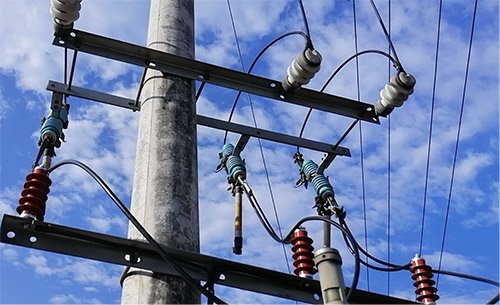
A surge arrester is a protective device that limits overvoltage and diverts surge current safely to ground. In simple terms, it acts like a pressure relief valve for the electrical system. Under normal voltage, it remains almost inactive. When a dangerous surge appears, it conducts quickly and clamps the voltage to a safer level.
Why overvoltage is dangerous
Insulation systems in transformers and switchgear are designed with a specific insulation level, such as power frequency withstand voltage and lightning impulse withstand voltage. If a surge exceeds that insulation capability, it may cause flashover, partial discharge, insulation breakdown, or long-term aging.
The damage is not always immediate. A single severe surge can destroy equipment, but repeated smaller surges can also weaken insulation over time. This is why surge protection is especially important for outdoor substations, distribution transformers, renewable energy projects, industrial plants, and areas with frequent thunderstorms.
How a surge arrester works
Modern surge arresters usually use metal oxide varistor blocks, often based on zinc oxide. These materials have a very useful electrical characteristic: at normal system voltage, they have high resistance. When voltage rises above a certain level, their resistance drops sharply and they conduct surge current.
After the surge passes, the arrester returns to a high-resistance state. This allows the system to continue operating normally.
The arrester does not eliminate lightning or switching surges. Instead, it controls the voltage level seen by the protected equipment. The goal is to keep the residual voltage below the insulation withstand level of the transformer, switchgear, cable, or other equipment.
Where are surge arresters installed?
Surge arresters are commonly installed at:
- Transformer high-voltage terminals
- Medium-voltage switchgear incoming or outgoing feeders
- Cable termination points
- Overhead line to underground cable transition points
- Solar and wind power systems
- Industrial power distribution networks
For transformers, arresters are often installed as close as possible to the transformer terminals. Distance matters. If the arrester is too far away, the protected equipment may still experience a higher voltage due to traveling wave effects.
Key parameters to check
When selecting a surge arrester, engineers should check rated voltage, continuous operating voltage, nominal discharge current, residual voltage, energy absorption capability, pollution level, creepage distance, and installation environment.
For outdoor use, housing material and sealing performance are also important. Polymer-housed arresters are widely used because they are lighter and have good pollution performance. Porcelain-housed arresters are still used in some traditional utility applications.
The grounding system is another key point. A surge arrester can only work well when the grounding path is low impedance and properly connected. Poor grounding may reduce the effectiveness of the entire protection scheme.
A small device with a large protection role
Surge arresters are often inexpensive compared with the equipment they protect. However, their influence on system reliability is significant. A properly selected arrester can prevent transformer failure, reduce switchgear insulation stress, and improve power supply continuity.
At DSJ Electrical, we consider surge protection during the design of transformers, medium-voltage switchgear, outdoor substations, and complete power distribution solutions. For projects in lightning-prone, coastal, or industrial environments, arrester selection should never be treated as an afterthought.
Power systems cannot avoid every surge. But with the right surge arrester, they can survive many of them safely.
For exclusive deals and latest offers, sign up by entering your email address below.



 +86 18513032986
 FLC Center, Chaoyang District, Beijing, China
Copyright © DSJ Electrical Co., Ltd. All Rights Reserved
Power Distribution Equipment & System Manufacturer