+86 18513032986


The Invisible Safety Guardian: A Complete Guide to the UL 67 Panelboard Standard
Admin 2026-07-09From North America to the world, how one standard protects electrical safety.
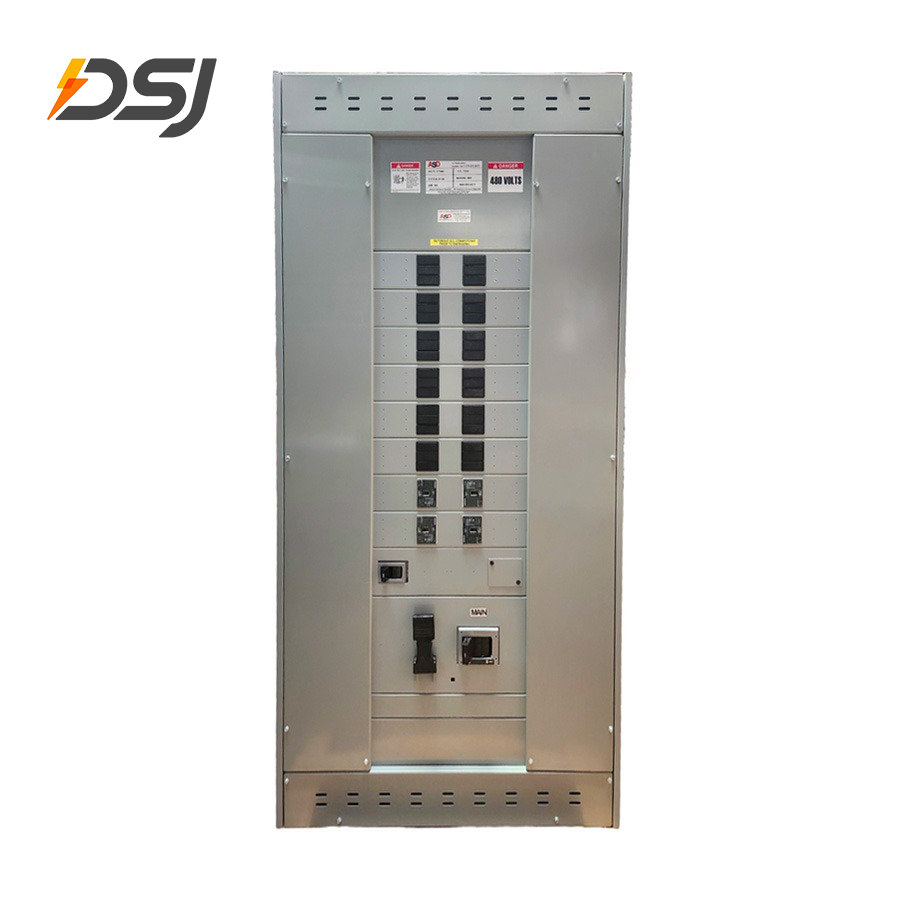
For most people, a panelboard is just a metal box with switches. But for electrical engineers, it is the heart of a building’s power system. It takes main power and splits it to lights, outlets, air conditioners, and other devices. And when a fault happens, it quickly cuts off the circuit to keep people and property safe. So what makes a panelboard truly reliable? The answer is often found in a small line on the nameplate: UL 67 Listed.
A standard born from the Great Chicago Fire
To understand UL 67, we need to go back to 1893. That year, the Chicago World’s Fair had many electrical fires. A young electrical engineer named William Merrill was sent to check the site. His work led him to start a new organization in 1894 – Underwriters Laboratories, or UL.
UL 67 is the special safety standard for low-voltage panelboards. It applies to panels rated 600V AC or DC or less. These panels are widely used in commercial buildings, homes, factories, and public facilities in North America and around the world. Unlike UL 891 for larger switchboards, UL 67 focuses on panels that are mounted in or against a wall. They are designed for front access only – you operate and maintain them from the front.
Four key safety features
The main goal of UL 67 is simple: prevent electric shock and fire. To do this, the standard uses four important layers of protection.
First layer: Dead front construction
UL 67 requires that all live parts be covered from the front. You cannot touch any exposed conductive part from the front. This is called “dead front” design. When an operator flips a breaker, they only see an insulating panel and breaker handles. The electrical parts stay safely hidden behind.
Second layer: Barriers for live parts
In 2017, UL 67 added an important rule. If a panelboard is used as service equipment, the line side of the main breaker is still live even when the breaker is off. So a barrier must be installed to protect workers. This shows a simple engineering truth: safety should not depend on “being careful” – it should be built in. These metal barriers must be thick enough – at least 0.032 inches (0.81 mm) for uncoated steel, and 0.034 inches (0.86 mm) for galvanized steel.
Third layer: Reliable busbars and breakers
UL 67 also has detailed rules for the internal parts. Busbars are the main paths that carry current. Full-size copper busbars are often recommended because they conduct well and handle heat. Branch breakers are usually the bolt-on type – they stay tight even after vibration or temperature changes. Every panelboard must have a neutral bus. If the panel is used as service equipment, the nameplate must say how the neutral is grounded.
Fourth layer: Strict field installation rules
The standard also covers terminals, kits, and other field-installed parts. The nameplate must clearly show the manufacturer, model number, electrical ratings, and the type of wire allowed (copper or aluminum). Terminals have temperature ratings – like 60°C or 75°C – which match the wire’s ampacity.
Tough tests before getting UL 67 approval
A panelboard must pass several tough tests to earn the UL 67 mark. Here are the most important ones.
Temperature rise test – The panel runs at full load. Engineers measure the temperature rise of each part. This checks if the cooling design works well enough for long-term use.
Short-circuit test – Engineers create a fake short circuit on purpose. They check if the panel and its breakers can safely stop the fault current. For a panel without a specified enclosure, the default short-circuit rating is 10,000 amps. Many good products reach 65,000 amps at 480V, and some even go up to 200,000 amps at 240V.
Dielectric voltage withstand test (Hi-Pot test) – A high voltage is applied to the insulation. This tests if the insulation can hold up without breaking down.
Insulation resistance test – This measures the quality of the insulation material. It makes sure the insulation stays good under normal voltage.
Only panels that pass all four tests can carry the UL 67 Listed mark. That mark is not just a certificate – it is a promise of safety.
Beyond UL 67: a complete global certification network
Passing UL 67 is the basic door to the North American market. But a single standard is often not enough for real projects. A responsible manufacturer should build a full set of certifications for different markets.
Take DSJ Electrical as an example. Founded in 1983 and based in Beijing, DSJ Electrical makes panelboards, switchboards, transformers, and solar power equipment. They have earned UL, cUL, CSA, CE, and ISO certifications. Their UL 67 series panelboards are built to meet the standard exactly. Precision manufacturing and strict quality control make sure the products perform well in heat, voltage, and short-circuit protection.
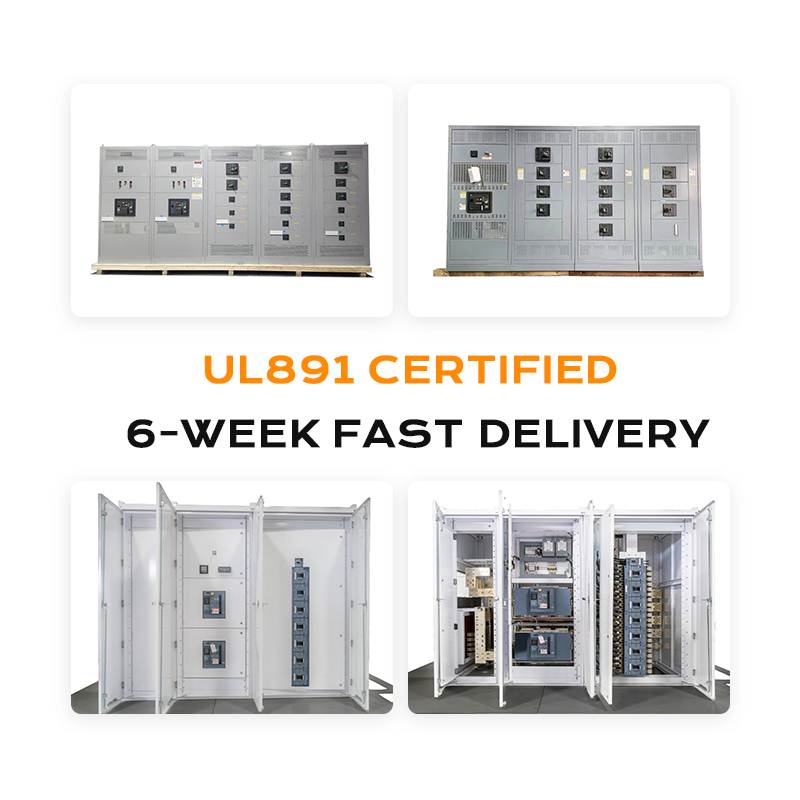
In 2023, DSJ Electrical also earned the UL 891 certification for low-voltage switchboards. Soon after, they supplied products to more than 30 customers in the United States, covering over 15 states. This move shows not only technical growth but also a deep understanding of the National Electrical Code (NEC). From drawing review to cost estimate, from material selection to wiring design – every step follows UL standards.
One real-world example: DSJ Electrical recently made and delivered a 600A panelboard and transformer cabinet for the Holden Colony project in Canada. From design, production, assembly, and testing to shipment – the whole process took only 40 days. All internal parts were UL certified. The final product passed CSA certification on the first try. This kind of “certified design, certified manufacturing, certified delivery” service is rare and valuable in today’s electrical engineering world.
Final words
The UL 67 standard shows how the electrical industry has never stopped working for safety. It is a detailed technical rulebook. But more than that, it is a way of thinking – safety comes first in design, manufacturing, testing, and installation. From dead front requirements to short-circuit tests, from busbar material to terminal temperature ratings, every rule comes from real accidents and lessons learned.
A good electrical product is not just one that “works when turned on.” It is one that stays safe even in the worst conditions. Companies like DSJ Electrical turn this idea into real products. They have proven in many global markets that Chinese manufacturing can deliver real technical quality. Whether it is a panelboard in a commercial building or a switchboard on a factory floor, the trust that UL brings becomes an invisible, silent guardian of safety – always there, always working.
For exclusive deals and latest offers, sign up by entering your email address below.



 +86 18513032986
 FLC Center, Chaoyang District, Beijing, China
Copyright © DSJ Electrical Co., Ltd. All Rights Reserved
Power Distribution Equipment & System Manufacturer