+86 18513032986


What types of circuit breakers are there?
Admin 2025-11-28Content
In modern power systems, whether it's high-voltage transmission, factory workshops, or our daily homes, we cannot live without a crucial electrical component—the circuit breaker. As the "guardian" of the circuit, the circuit breaker is primarily responsible for automatically and quickly cutting off the current when faults such as short circuits, overloads, or undervoltage occur, thereby protecting electrical equipment and lines and preventing the accident from escalating.
However, faced with a wide variety of models and names, you might ask: What types of circuit breakers are there? In fact, there are many types of circuit breakers. They can be classified into several categories based on different voltage levels, arc-extinguishing media, structural characteristics, and application scenarios. Understanding these classifications helps us make the right choice in practical applications.
I. Classification by Voltage Level: High Voltage and Low Voltage
This is the most basic and intuitive classification method, which determines the design structure and main application scenarios of the circuit breaker.
1. Low-Voltage Circuit Breaker
Primarily used for AC 1000V and below, and DC 1500V and below power distribution networks and motor protection.
2. Miniature Circuit Breaker (MCB)
Often simply called an air circuit breaker, mainly used for overload and short-circuit protection of terminal power distribution lines, such as lighting and socket circuits in homes and office buildings.
3. Molded Case Circuit Breaker (MCCB)
Uses a plastic casing as insulation and is typically used for the protection of power distribution lines, motors, transformers, etc. Its breaking capacity and rated current are generally greater than those of miniature circuit breakers.
4. Air Circuit Breaker (ACB)
Also known as a frame-type circuit breaker, commonly used as the main switch in low-voltage power distribution systems. It features high breaking capacity and adjustable protection functions, but has a complex structure and large capacity.
5. High-Voltage Circuit Breaker (HVCR)
Used in AC 3kV and above, and DC 1500V and above power systems, it is a core control device in power transmission and distribution systems.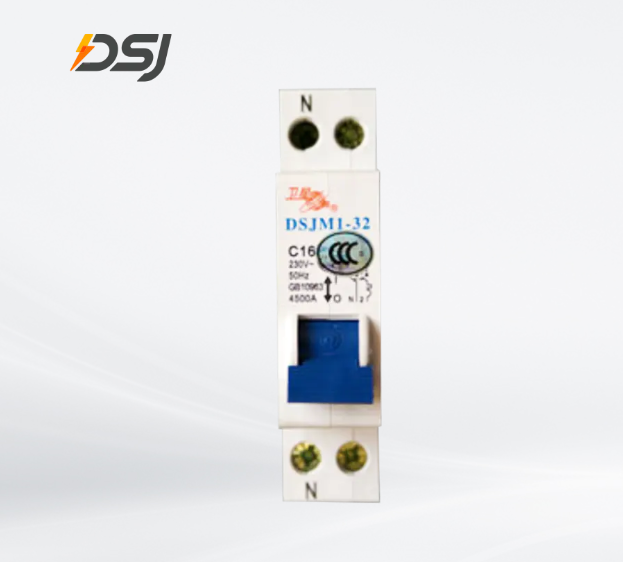
II. Classification by Arc-Extinguishing Medium: Differences in Core Technologies
Circuit breakers generate high-temperature arcs when interrupting large currents, requiring rapid arc extinguishing through a specific medium. This is the key technology distinguishing high-voltage circuit breaker types.
1. Vacuum Circuit Breaker (VCB)
Features: Utilizes the excellent insulation properties and extremely fast arc propagation speed of vacuum for arc extinguishing.
Applications: Primarily used in medium-voltage power systems of 35kV and below. It has the advantages of small size, long lifespan, and low maintenance, and is currently the mainstream circuit breaker in the medium-voltage field.
2. SF6 Circuit Breaker (Gas Circuit Breaker)
Features: Utilizes the high insulation strength and arc-extinguishing capability of sulfur hexafluoride (SF6) gas to interrupt current.
Applications: Primarily used in high-voltage and ultra-high-voltage power systems above 35kV.
3. Oil Circuit Breaker (OCB)
Features: Utilizes the gas generated by the decomposition of insulating oil under electric arc to extinguish the arc.
Applications: Early high-voltage equipment, due to fire risks and high maintenance requirements, is gradually being replaced by vacuum and SF6 circuit breakers.
4. Air Circuit Breaker (High-Voltage)
In the high-voltage field, specifically refers to circuit breakers that use compressed air to extinguish the arc.
III. Classification by Protection Function: More Specialized Applications
In addition to basic overload and short-circuit protection, some circuit breakers have additional protection functions to meet specific application needs.
1. Residual Current Device (RCD/RCBO)
Features: Detects and interrupts leakage current, effectively preventing electric shock accidents and electrical fires.
Applications: Widely used in homes, commercial buildings, and places requiring electric shock protection.
2. Intelligent Circuit Breakers
Features: Integrating microprocessors and communication modules, they provide remote control, telemetry, fault analysis, and power management.
Applications: Smart grids, large factories, data centers, and other advanced power systems.
Regardless of the type of circuit breaker, their core mission is to ensure electrical safety and the reliable operation of the power system. Selecting the correct circuit breaker model is the first step in designing and maintaining electrical systems.
For exclusive deals and latest offers, sign up by entering your email address below.



 +86 18513032986
 FLC Center, Chaoyang District, Beijing, China
Copyright © DSJ Electrical Co., Ltd. All Rights Reserved
Power Distribution Equipment & System Manufacturer