+86 18513032986


When 630kVA Meets 6V: Why This Transformer Is Not as Simple as It Looks
Admin 2026-05-01Delivering a transformer is not difficult. But delivering a 630kVA transformer with only 6V output, and having it pass strict European testing, is a very different challenge. Recently, DSJ Electrical Co., Ltd. successfully completed testing for a customized low-voltage, high-current transformer built for a European client. On paper, the specification looks simple. In reality, it requires a high level of engineering and manufacturing expertise.
At 630kVA and 6V, the secondary current exceeds 100,000 amps. At this level, the project is no longer a standard transformer design. It becomes a high-current engineering problem. Traditional winding methods are not suitable. The conductors must carry extremely high current while keeping resistance as low as possible. Even a very small resistance can create significant heat at this scale. This means the real challenge is not stepping down the voltage, but safely and reliably handling massive current.
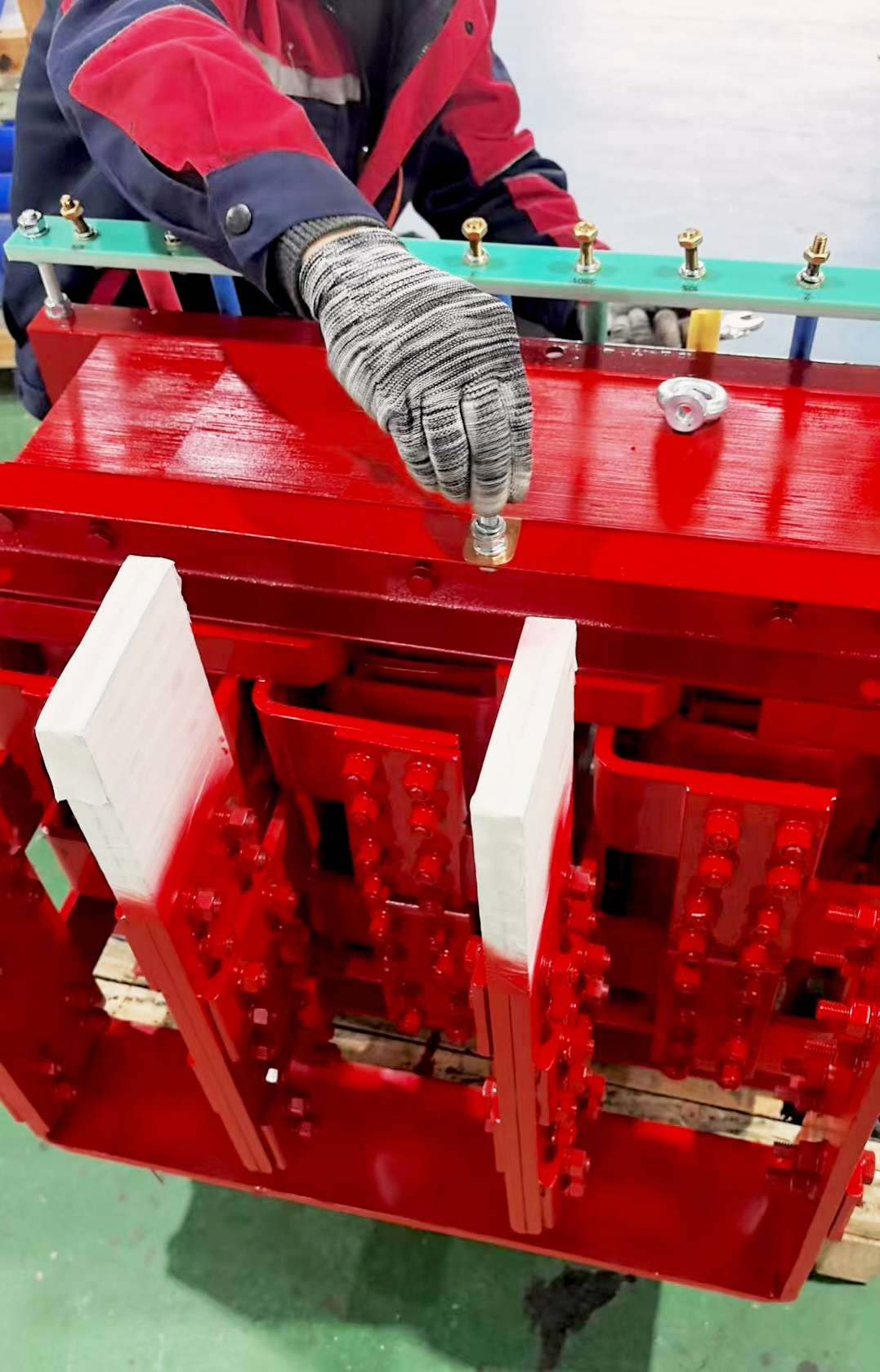
In most transformers, the high-voltage side is more complex. In this case, the opposite is true. The main challenge is on the low-voltage side. With such a low output voltage, the winding may have only one or two turns. This makes voltage control more difficult and increases the risk of magnetic saturation. It also limits how the winding can be arranged. These designs cannot rely only on theory. They depend heavily on real-world experience.
Thermal performance is another critical factor. Copper losses increase with the square of the current. Even with large conductors, heat generation is significant. The design must focus on efficient cooling, optimized conductor layout, and minimal contact resistance. Without proper heat control, local hotspots can affect insulation and reduce service life.
High current also creates strong electromagnetic forces, especially during fault conditions. These forces can stress the windings and internal structure. If the mechanical design is not strong enough, it can lead to deformation or movement over time. This is why mechanical strength is just as important as electrical design in this type of transformer.
External connections are another key point. Handling 100kA requires carefully designed busbar systems and high-quality contact surfaces. Every connection must be reliable. A weak connection can quickly become a source of overheating or failure.
Transformers like this are typically used in demanding applications such as electric furnaces, electrolysis, and heavy industrial processes. They are not standard products. Each unit is custom-designed based on the application. This requires both solid engineering knowledge and extensive field experience.
The successful testing of this transformer for our French client confirms that the design performs well under real operating conditions. It also reflects the reliability of both the design and manufacturing process.
A 630kVA, 6V transformer may look simple at first glance. In reality, it represents one of the more challenging types of transformer design. The difficulty is not in reducing voltage. It is in delivering extremely high current in a safe, stable, and efficient way.
For exclusive deals and latest offers, sign up by entering your email address below.



 +86 18513032986
 FLC Center, Chaoyang District, Beijing, China
Copyright © DSJ Electrical Co., Ltd. All Rights Reserved
Power Distribution Equipment & System Manufacturer