+86 18513032986


When Should You Choose an Oil-Filled Transformer Instead of a Dry-Type Transformer?
Admin 2026-03-11Content
Selecting between an oil-filled transformer and a dry-type transformer is not a matter of preference. It is an engineering decision based on load profile, installation environment, thermal performance, cost considerations, and code requirements.
Dry-type transformers are common in commercial buildings. However, in many industrial and utility applications, oil-filled transformers provide clear technical advantages. The decision should be based on operating conditions, not general assumptions.
High Capacity and Continuous Heavy Load
Oil-filled transformers are typically the better option when system capacity is large or when the transformer operates under sustained heavy load.
Transformer oil has significantly better thermal conductivity and heat absorption capacity than air. This allows heat to be removed more effectively from the windings and core. As a result, oil-filled units operate at lower temperature rise under comparable loading conditions.
When capacity exceeds approximately 2.5 MVA, or when loading regularly approaches 80% or more, thermal stability becomes critical. In these cases, dry-type transformers, which rely on air cooling, may operate closer to their thermal limits.
For data centers, manufacturing facilities, and other high-duty-cycle applications, stronger thermal management directly supports longer insulation life and improved reliability.
Outdoor and Harsh Environments
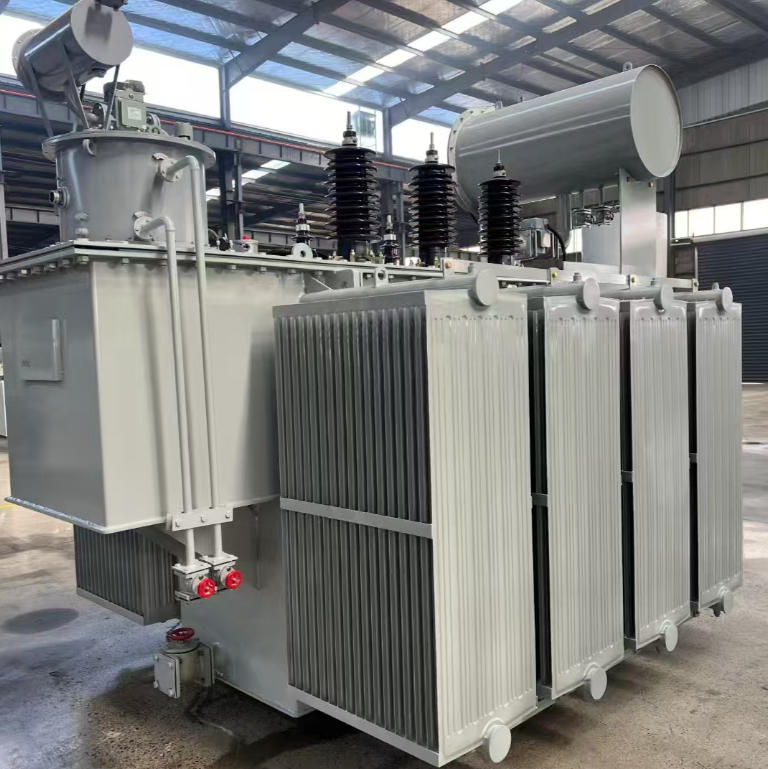
Oil-filled transformers are generally more suitable for outdoor installations and demanding environmental conditions.
Sealed tank construction isolates the internal insulation system from ambient air. This design helps protect against moisture, salt exposure, dust, and industrial contaminants. It also improves long-term reliability in areas with large temperature swings.
Dry-type transformers are air-cooled and ventilated. While enclosure protection can mitigate environmental exposure, the windings are still more directly influenced by humidity and airborne contamination over time.
For utility substations, renewable energy plants, and outdoor industrial installations, oil-filled transformers remain the standard solution.
Efficiency and Lifecycle Economics
In medium- and high-capacity ranges, oil-filled transformers often provide better overall efficiency and lifecycle cost performance.
Improved cooling typically results in lower operating temperatures and reduced load losses. Even a 0.5% to 1% efficiency difference can translate into significant energy savings over years of operation in large facilities.
In addition, oil-filled transformers generally offer higher power density. For the same kVA rating, they are often more compact and may provide a lower cost per kVA at higher capacities.
When long-term operating cost and return on investment are key considerations, oil-filled designs frequently offer an advantage.
Space and System Integration
Although dry-type transformers do not require oil containment systems, they typically require more physical space for ventilation and airflow clearance.
Oil-filled transformers, due to higher power density, can offer a smaller footprint for the same rating. In pad-mounted configurations or integrated outdoor substations, this can simplify layout and system coordination.
In projects where outdoor installation is acceptable and space optimization is important, oil-filled transformers can be easier to integrate.
When Dry-Type Transformers Are More Appropriate
Oil-filled transformers are not the best choice for every application.
Dry-type transformers are often preferred when units must be installed inside occupied buildings or where strict fire safety and environmental requirements apply. Hospitals, schools, office buildings, and high-rise commercial facilities frequently specify dry-type units for these reasons. Each project should be evaluated based on code compliance, fire risk assessment, and site-specific constraints.
Transformer selection should be based on thermal performance, environmental exposure, loading profile, regulatory requirements, and long-term economics.
With more than four decades of manufacturing experience serving North American and European markets, DSJ Electrical has focused on switchgear and transformer solutions for industrial and utility applications. In real-world medium- and high-power systems, oil-filled transformers continue to be the dominant and technically sound choice.
For exclusive deals and latest offers, sign up by entering your email address below.



 +86 18513032986
 FLC Center, Chaoyang District, Beijing, China
Copyright © DSJ Electrical Co., Ltd. All Rights Reserved
Power Distribution Equipment & System Manufacturer