+86 18513032986


Why UL 891 Is a Proven Safety Standard, Not Just a Label?
Admin 2026-01-30Content
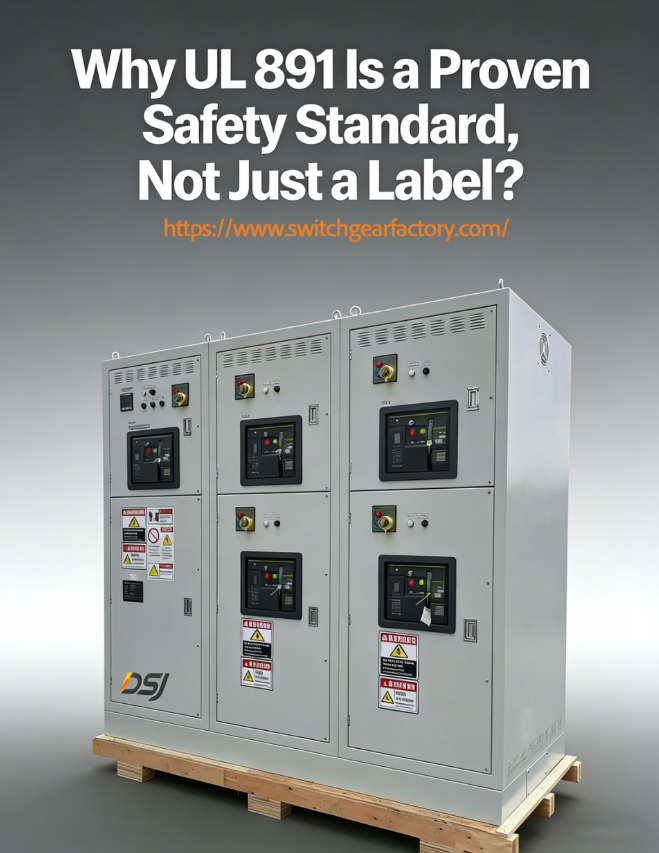
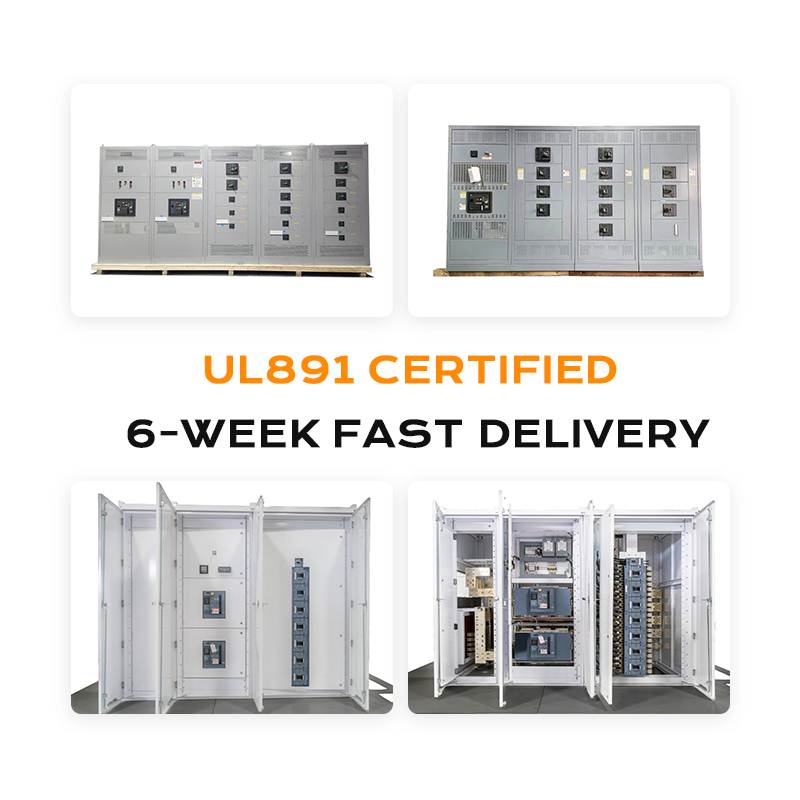
UL 891 is the primary safety standard for low-voltage switchboards in North America. It is widely specified in commercial, industrial, and utility projects. The reason is simple: UL 891 focuses on real electrical safety, not paperwork compliance. Unlike general-purpose panel standards, UL 891 addresses the risks that matter most in high-current distribution systems. Its value is reflected in several key technical areas.
1. Clearly Defined Short-Circuit Current Ratings (SCCR)
Short-circuit events are one of the most severe hazards in low-voltage systems. UL 891 requires switchboards to have a verified SCCR, based on the actual configuration of:
- Main and feeder devices
- Bus structure
- Protective components
This rating is not assumed. It must be supported by testing or UL-accepted calculation methods. For engineers, this provides confidence that the switchboard can withstand fault conditions without catastrophic failure.
2. Verified Busbar System Design
The busbar system is the backbone of a switchboard. UL 891 places strict requirements on:
- Bus material and cross-section
- Spacing and insulation
- Mechanical strength under fault stress
- Temperature rise under continuous load
The bus system is evaluated as part of the complete assembly, not as an isolated component. This ensures long-term reliability and stable performance at high current levels. At DSJ Electrical, busbar layouts, supports, and connections are designed specifically to meet UL 891 structural and thermal requirements, rather than adapting generic cabinet designs.
3. Internal Separation and Protection Against Misoperation
UL 891 addresses human factors as well as electrical ones. The standard includes clear expectations for:
- Barriers between live parts and service areas
- Compartmentalization of main and branch sections
- Prevention of accidental contact during operation or maintenance
These design rules reduce the risk of improper operation and improve safety during inspection, troubleshooting, and future expansion.
4. Arc Fault Risk Mitigation Through Design Discipline
While UL 891 is not an arc-resistant standard, it reduces arc fault risk through conservative design requirements, including:
- Adequate clearances and creepage distances
- Secure conductor routing
- Robust mechanical fastening of current-carrying parts
By controlling these fundamentals, the standard lowers the probability of internal faults caused by vibration, thermal cycling, or installation stress.
5. Mandatory Use of UL Listed or Recognized Components
Every critical internal component in a UL 891 switchboard must be UL Listed or UL Recognized and used within its approved ratings. This creates a consistent safety chain from individual components to the complete system. It also simplifies inspection, replacement, and long-term maintenance. At DSJ Electrical, component selection is treated as part of the safety design process, not as a procurement decision.
Conclusion
UL 891 is not a symbolic certification. As a dedicated manufacturer of UL 891 listed switchboards, DSJ Electrical applies the standard at the design, assembly, and verification stages. The goal is not to meet the minimum requirement, but to deliver equipment that performs predictably in real operating conditions. It is a practical safety standard built around fault performance, structural integrity, and controlled risk. For projects that demand dependable low-voltage power distribution, UL 891 remains a trusted technical foundation—and a common language between engineers, inspectors, and manufacturers.
For exclusive deals and latest offers, sign up by entering your email address below.



 +86 18513032986
 FLC Center, Chaoyang District, Beijing, China
Copyright © DSJ Electrical Co., Ltd. All Rights Reserved
Power Distribution Equipment & System Manufacturer