+86 18513032986


How Many Watts Can a 15 Amp Breaker Handle? Full Guide
Admin 2026-05-11Content
- 1 How Many Watts Can a 15 Amp Breaker Handle: The Direct Answer
- 2 The Math Behind the Wattage Limit
- 3 Peak Load vs. Continuous Load: Why the Distinction Matters
- 4 What Appliances Can Run on a 15 Amp Circuit Breaker
- 5 How Many Outlets Can a 15 Amp Circuit Breaker Support
- 6 15 Amp vs 20 Amp Circuit Breaker: Which One Do You Need
- 7 What Happens When You Overload a 15 Amp Circuit Breaker
- 8 The 80% Rule and Why Electricians Follow It Strictly
- 9 Double Pole 15 Amp Breaker: A Different Wattage Scenario
- 10 How to Calculate Your Circuit Load Before Adding Devices
- 11 Signs Your 15 Amp Circuit Breaker Is Being Overloaded
- 12 Wiring Requirements for a 15 Amp Circuit: What You Need to Know
- 13 Practical Tips for Managing Load on a 15 Amp Circuit
How Many Watts Can a 15 Amp Breaker Handle: The Direct Answer
A 15 amp circuit breaker operating on a standard 120-volt residential system can handle a maximum of 1,800 watts. That figure comes from a straightforward formula: Volts × Amps = Watts, so 120V × 15A = 1,800W. However, that number is the absolute ceiling, not the number you should aim for in practice.
The National Electrical Code (NEC) requires that continuous loads — meaning any load running for three hours or more — must not exceed 80% of a circuit's rated capacity. For a 15 amp breaker, that means the safe continuous load limit is 1,440 watts. Exceeding this threshold repeatedly will cause the breaker to trip, and over time, it can degrade wiring insulation and increase the risk of electrical fires.
To put it plainly: plan your circuits around 1,440 watts for anything running continuously, and keep in mind that 1,800 watts is the hard upper limit for brief or peak loads only.
The Math Behind the Wattage Limit
Understanding where these numbers come from helps you apply them correctly. Electricity follows Ohm's Law, which describes the relationship between voltage, current (amps), and resistance. A derived form of that law gives us the power equation: P (watts) = V (volts) × I (amps). In a standard U.S. home, branch circuits operate at 120 volts, so plugging in the numbers gives:
- 120V × 15A = 1,800W maximum (peak load)
- 120V × 12A (80% of 15A) = 1,440W safe continuous load
The 80% rule exists because circuit breakers are thermal devices. When current flows through the breaker's internal components, heat builds up. A breaker running at 100% of its rated amperage for extended periods generates enough heat to trip the device, and more importantly, enough heat to stress the wiring connected to it. By keeping the load at or below 80%, you give the system thermal headroom.
It is also worth noting that the voltage in a real home is not always exactly 120 volts. It can range between 110 and 125 volts depending on the utility supply and the load on the grid. At 115 volts — a common midpoint — a 15 amp circuit would produce 115V × 15A = 1,725 watts at peak and about 1,380 watts at the safe 80% continuous limit. For most practical calculations, 120 volts is the standard assumption.
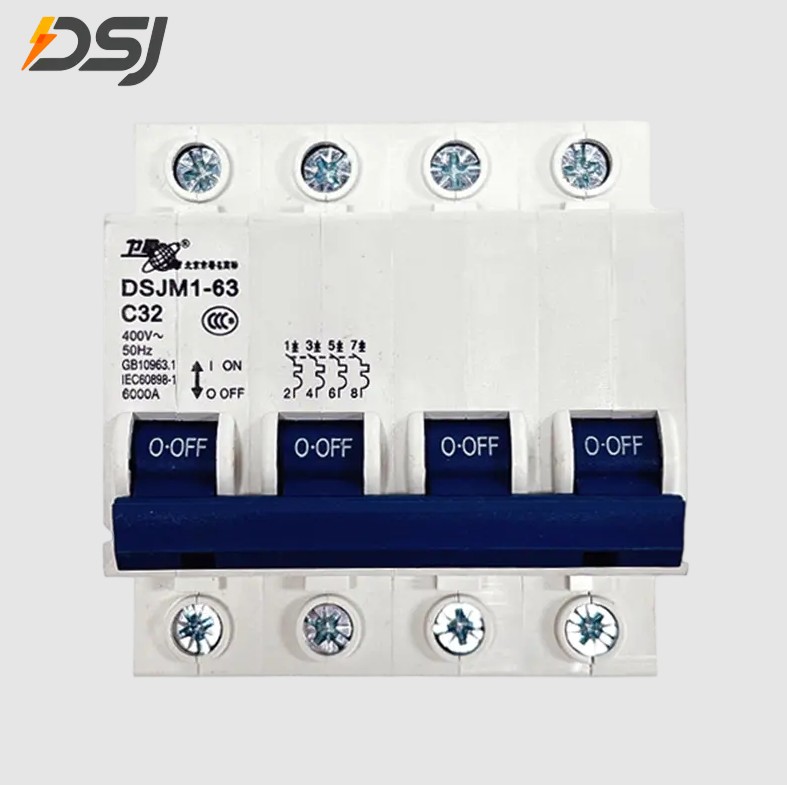
Peak Load vs. Continuous Load: Why the Distinction Matters
One of the most misunderstood aspects of a 15 amp circuit breaker is the difference between what it can handle momentarily versus what it can sustain safely over time. These two figures — 1,800 watts and 1,440 watts — are not interchangeable, and using the wrong one when planning a circuit can lead to nuisance tripping or worse.
Peak (Non-Continuous) Load: 1,800 Watts
This is the absolute rated maximum. The circuit breaker is designed to carry up to 1,800 watts for short durations without tripping. Examples of non-continuous loads include a vacuum cleaner used for 20 minutes or a power drill used briefly during a DIY project. As long as the load does not persist, the thermal elements in the breaker do not have enough time to accumulate critical heat.
Continuous Load: 1,440 Watts
Anything that runs for three hours or more without interruption — an electric space heater, a window air conditioner, a dehumidifier — falls into the continuous load category. For these applications, the NEC mandates the 80% rule strictly. Running a 1,500-watt space heater on a 15 amp circuit, for example, is a common mistake. That heater alone exceeds the 1,440-watt continuous limit and is very likely to trip the breaker repeatedly or cause long-term wiring damage.
Motor-driven appliances also introduce a concept called inrush current — a brief surge of electricity drawn when the motor first starts. A refrigerator compressor, for instance, might draw two to three times its running current for a fraction of a second at startup. A properly functioning 15 amp breaker will tolerate these brief surges without tripping, but they are a factor to consider when you are already running multiple devices on the same circuit.
What Appliances Can Run on a 15 Amp Circuit Breaker
Knowing the wattage limit is useful only when you match it against real-world appliance consumption. Below is a reference table showing common household devices and their typical wattage draws, which you can use to plan how many devices can safely share a single 15 amp circuit.
| Appliance | Typical Wattage | Continuous Load? | Safe on 15A Circuit? |
|---|---|---|---|
| LED light bulb | 8–15W | Yes | Yes (many can run together) |
| Laptop computer | 45–100W | Yes | Yes |
| Desktop computer + monitor | 200–400W | Yes | Yes (with care) |
| Television (55") | 80–150W | Yes | Yes |
| Refrigerator | 100–200W (running) | Yes | Yes, ideally on dedicated circuit |
| Microwave oven | 1,000–1,200W | No (short use) | Marginal — best on dedicated circuit |
| Toaster | 800–1,200W | No | Yes (alone on circuit) |
| Electric space heater | 1,500W | Yes | No — exceeds 1,440W continuous limit |
| Hair dryer | 1,200–1,875W | No | Borderline — use alone on circuit |
| Window air conditioner (small) | 900–1,440W | Yes | Yes, if at or under 1,440W and alone |
Notice that an electric space heater at 1,500 watts exceeds the safe continuous limit of 1,440 watts on its own — before anything else is plugged into the circuit. This is exactly the scenario that causes the most residential circuit breaker trips and is a leading contributor to home electrical fires when the breaker is faulty or has been improperly replaced with a higher-rated one.
How Many Outlets Can a 15 Amp Circuit Breaker Support
The number of outlets on a 15 amp circuit is not fixed by a single rule — it depends on what gets plugged into them. That said, the NEC recommends a maximum of 8 to 10 outlets per 15 amp circuit as a general planning guideline. This is based on the assumption that not all outlets will be in use simultaneously and that typical residential loads stay well within the circuit's capacity when distributed across several receptacles.
Lights and power outlets are normally wired on separate branch circuits. A lighting circuit might supply a dozen or more LED fixtures without approaching the 1,440-watt continuous limit. A general-purpose outlet circuit needs more careful load management because the devices plugged into it vary widely in wattage.
High-draw appliances such as microwaves, refrigerators, washing machines, and dishwashers are best placed on dedicated circuits — circuits that feed only that one appliance. A dedicated 15 amp or 20 amp circuit for a major appliance ensures that it never shares headroom with other devices and that the circuit breaker will only trip if the appliance itself develops a fault.
15 Amp vs 20 Amp Circuit Breaker: Which One Do You Need
A 20 amp circuit breaker operating at 120 volts can handle up to 2,400 watts at peak and 1,920 watts continuously (using the 80% rule: 120V × 16A = 1,920W). That is a meaningful increase over the 1,440-watt continuous limit of a 15 amp circuit.
However, you cannot simply swap a 15 amp breaker for a 20 amp breaker without also checking the wire gauge. A 15 amp circuit uses 14-gauge (AWG) copper wire. A 20 amp circuit requires thicker 12-gauge wire. This is a critical safety point: if you install a 20 amp circuit breaker on 14-gauge wiring, the wire can overheat and catch fire before the breaker ever trips, because the breaker will not respond until the current exceeds 20 amps — which is more than the 14-gauge wire can safely carry. Never upgrade a breaker without verifying that the wire gauge matches the new rating.
| Feature | 15 Amp Breaker | 20 Amp Breaker |
|---|---|---|
| Peak wattage (120V) | 1,800W | 2,400W |
| Safe continuous wattage | 1,440W | 1,920W |
| Required wire gauge | 14 AWG | 12 AWG |
| Typical use | Lighting, general outlets, electronics | Kitchen appliances, bathrooms, workshops |
| NEC requirement areas | Bedrooms, living rooms, hallways | Kitchens, garages, laundry rooms |
Kitchens are required by the NEC to have at least two 20-amp small appliance circuits because of the high-wattage devices commonly used there — toasters, microwaves, coffee makers, and electric kettles can easily combine to pull well over 1,800 watts simultaneously. A standard 15 amp circuit breaker simply cannot meet that demand reliably.
What Happens When You Overload a 15 Amp Circuit Breaker
A circuit breaker's primary job is to protect the wiring in your walls, not the devices plugged into outlets. When current exceeds the breaker's rating, the internal bimetallic strip heats up and bends, physically separating the contacts and cutting power to the circuit. This is a tripped breaker — an intentional, protective action.
The sequence of events during an overload typically looks like this:
- Total wattage on the circuit exceeds 1,800 watts, pushing current above 15 amps.
- Heat begins to build in the breaker's thermal element and in the wiring itself.
- If the overload persists, the breaker trips and the circuit loses power.
- If the breaker is old, faulty, or has been replaced with a higher-rated unit incorrectly, it may not trip in time.
- Sustained overheating of 14-gauge wire can melt insulation, causing arcing and potentially an electrical fire inside the wall.
Repeated tripping is not just an inconvenience — it is a warning. If a specific circuit keeps tripping, the solution is not to reset the breaker and carry on. It means either too many high-draw devices are sharing the circuit, or there is a fault somewhere in the wiring that needs professional inspection. Upgrading to a larger circuit breaker without addressing the underlying cause creates a genuinely dangerous situation.
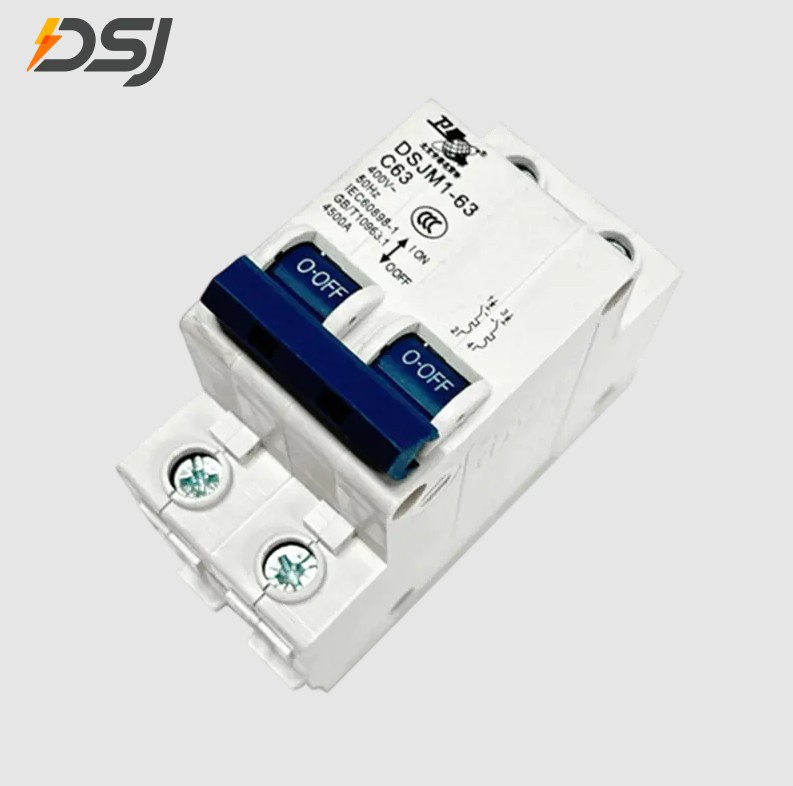
The 80% Rule and Why Electricians Follow It Strictly
The 80% rule — limiting continuous loads to 80% of a circuit's rated capacity — comes directly from the National Electrical Code, specifically NEC Article 210.20. It is not a suggestion or a rough guideline. It is a code requirement for branch circuit conductors and overcurrent protection devices wherever continuous loads are present.
For a 15 amp circuit breaker, applying the rule gives a continuous load limit of 12 amps, or 1,440 watts at 120 volts. The rationale is thermal tolerance. Circuit components — breakers, wire connections, outlet receptacles — all have a rated ampacity that assumes some headroom for heat dissipation. Running at 100% rated capacity for hours at a time means operating at the edge of that tolerance every single moment, with no buffer for ambient temperature, connection resistance, or minor voltage fluctuations.
In practice, this rule matters most in rooms where appliances run for extended periods: living rooms with entertainment systems left on for hours, home offices with multiple monitors and computers, bedrooms with electric blankets or heating pads running overnight, and any space with a window air conditioner or space heater. In all of these scenarios, keeping total continuous wattage at or under 1,440 watts is the electrically safe approach.
Double Pole 15 Amp Breaker: A Different Wattage Scenario
Most residential lighting and outlet circuits use a single-pole 15 amp circuit breaker operating at 120 volts. But some circuits use a double-pole 15 amp breaker, which connects to two hot wires and operates at 240 volts. The wattage capacity changes significantly in this configuration.
At 240 volts, the same 15 amp rating yields: 240V × 15A = 3,600 watts maximum, or 2,880 watts for continuous loads. Double-pole 15 amp breakers are used for smaller 240-volt loads such as certain electric baseboard heaters, some older window air conditioners, and small workshop equipment.
It is important not to confuse the two. If someone asks "how many watts does a 15 amp breaker handle" without specifying the voltage, the standard answer of 1,800 watts (peak) and 1,440 watts (continuous) assumes the common single-pole, 120-volt residential configuration. For 240-volt circuits, the numbers double. The amperage of the breaker remains the same; it is the voltage that changes the wattage equation.
How to Calculate Your Circuit Load Before Adding Devices
Before plugging a new device into a circuit, it is useful to estimate the existing load and confirm there is headroom to spare. Here is a practical step-by-step approach:
- Identify the circuit. Use the panel directory (the list inside your electrical panel door) to find which breaker controls the outlets and lights in the area you are working with. If the directory is unclear, use a circuit tester or plug in a lamp and flip breakers until the light goes out.
- List every device currently on that circuit. Walk the room and note every outlet and light fixture connected to it. Check each device's wattage on its label or in its manual.
- Add up the wattage. Total the wattage of every device that could realistically be running at the same time. If any of those devices run for more than 3 hours at a stretch, use the 1,440-watt continuous limit as your ceiling.
- Check remaining capacity. Subtract the existing total from your limit (1,440W for continuous loads, 1,800W for short-term peak). The result is how much headroom the new device can use.
- Account for motor inrush. If the new device has a motor (a fan, a compressor, a pump), its startup surge can be 2 to 3 times its running wattage for a fraction of a second. A device rated at 500 watts running might draw 1,000 to 1,500 watts for the instant it starts up.
As a concrete example: suppose a home office circuit currently has a desktop computer drawing 300 watts, two monitors drawing 60 watts each, a desk lamp drawing 15 watts, and a phone charger drawing 20 watts. The total is 455 watts — well under both the 1,440-watt and 1,800-watt thresholds. Adding a laser printer that draws 400 watts while printing (a short-duration load) brings the peak to 855 watts, still comfortably within the circuit's capacity. Adding a 1,500-watt space heater running all day would push continuous load to 455 + 1,500 = 1,955 watts, which is 36% over the 1,440-watt safe continuous limit. That is a problem.
Signs Your 15 Amp Circuit Breaker Is Being Overloaded
Circuit overload does not always announce itself with a dramatic tripped breaker. In the early stages, the signs can be subtle and easy to dismiss. Recognizing them early can prevent a far more serious problem.
- Frequent breaker trips: If the same circuit breaker trips repeatedly — especially when using specific appliances — the circuit is likely drawing more current than it can safely sustain.
- Warm or hot outlet faceplates: Outlets that feel warm to the touch indicate excessive current flowing through the wiring. This is a fire warning sign, not just a nuisance.
- Flickering or dimming lights: When a high-draw appliance starts up on the same circuit as lighting, a noticeable dip in light intensity can indicate the circuit is near or at its capacity.
- Burning smell near outlets or the electrical panel: Any burning odor — particularly one that smells like hot plastic or rubber — requires immediate attention. Do not ignore it and do not try to diagnose it yourself. Turn off the circuit and call a licensed electrician.
- Discolored or scorched outlet covers: Visible discoloration around an outlet or switch plate indicates arcing, which can occur when wiring insulation has been damaged by sustained heat.
Any combination of these signs warrants a professional inspection. A 15 amp circuit breaker that has been tripping repeatedly may also have weakened internally, meaning its thermal trip threshold is no longer reliable. A breaker that has been reset dozens of times should be evaluated and possibly replaced by a qualified electrician.
Wiring Requirements for a 15 Amp Circuit: What You Need to Know
The circuit breaker does not work in isolation. It is part of a system, and every component must be matched correctly. For a 15 amp circuit, the standard wiring specifications are as follows:
- Wire gauge: 14 AWG copper wire is the minimum required for a 15 amp circuit. This wire has a rated ampacity of 15 amps, which matches the breaker exactly. Using smaller wire — say, 16 AWG — would be a serious code violation and fire hazard.
- Outlet type: Standard NEMA 5-15 outlets (the familiar two-slot or three-slot receptacles in most rooms) are rated for 15 amp circuits. These are the outlets found in bedrooms, living rooms, hallways, and general-use spaces.
- GFCI protection: In wet areas — bathrooms, kitchens within 6 feet of a sink, garages, outdoors — GFCI (Ground Fault Circuit Interrupter) protection is required by code regardless of whether the circuit is 15 or 20 amps. GFCI outlets and GFCI breakers protect against current leakage to ground, which can be life-threatening.
- AFCI protection: In bedrooms and many other living areas, the NEC now requires Arc Fault Circuit Interrupter (AFCI) breakers, which detect dangerous arcing faults that a standard circuit breaker would not catch until much more heat had built up.
These requirements exist because the circuit breaker alone is not sufficient protection for all types of electrical faults. A standard 15 amp circuit breaker protects against overcurrent (too many amps) and short circuits (direct contact between hot and neutral or ground wires), but it does not protect against the slower, lower-level arcing that causes a significant portion of residential electrical fires.
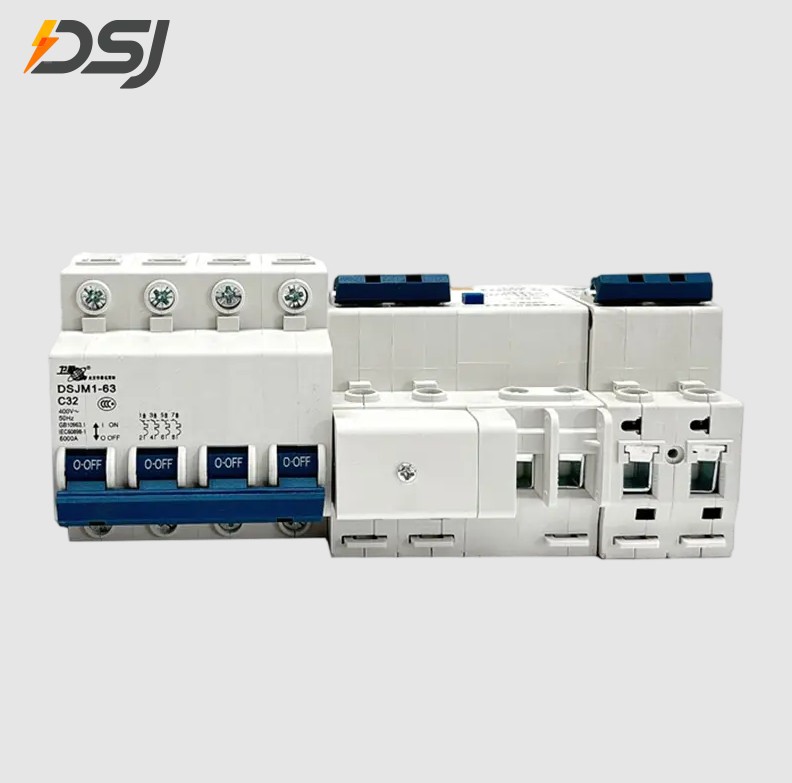
Practical Tips for Managing Load on a 15 Amp Circuit
Living within the limits of a 15 amp circuit breaker does not mean inconvenience. It means thoughtful load distribution. Here are actionable strategies for keeping circuits safe without limiting what you can do in your home:
- Use a space heater on its own dedicated circuit or avoid it altogether on 15A circuits. At 1,500 watts, a typical space heater exceeds the continuous load limit by 60 watts. If you use one regularly, it deserves its own 20 amp circuit with 12-gauge wiring.
- Spread high-draw appliances across multiple circuits. If you have a home office with multiple devices, try to identify which outlets are on different circuits and distribute the load. A microwave in a small office kitchen and a desktop workstation do not need to share a circuit.
- Use a smart power strip or energy monitor. Several inexpensive devices can measure real-time wattage consumption at an outlet or strip. Knowing exactly how much a circuit is drawing removes guesswork.
- Switch to LED lighting. Replacing 60-watt incandescent bulbs with 8-watt LEDs reduces lighting load by roughly 87%. A circuit with ten light fixtures drops from 600 watts of lighting load to about 80 watts, freeing up enormous capacity for other devices.
- Never use extension cords as permanent wiring. Extension cords are rated for temporary use and have limited ampacity. Daisy-chaining power strips or using a thin extension cord for a high-draw appliance creates resistance and heat in the cord itself, independent of what the circuit breaker sees.
- Have your panel inspected if it is older than 25 years. Older breakers can have degraded thermal elements that either trip too easily or — far more dangerously — fail to trip when they should. A licensed electrician can test breaker performance and identify any components that no longer operate within specification.
For exclusive deals and latest offers, sign up by entering your email address below.




 +86 18513032986
 FLC Center, Chaoyang District, Beijing, China
Copyright © DSJ Electrical Co., Ltd. All Rights Reserved
Power Distribution Equipment & System Manufacturer