+86 18513032986


How to Select a High-Quality Dry-Type Transformer?
Admin 2026-03-19Content
Dry-type transformers are widely used in commercial buildings, industrial facilities, data centers, and renewable energy projects. They are safe, environmentally friendly, and require minimal maintenance. However, product quality varies significantly. Evaluating a transformer requires more than comparing price or appearance. Engineers should look at compliance, construction type, key performance data, and long-term reliability.
1. Standards and Certification: The Baseline
Start with compliance. For North America, products typically need listing by UL or CSA. International projects often reference IEC standards, while U.S. engineering specifications frequently follow IEEE guidelines.
There is a clear difference between “designed to meet” a standard and being third-party listed. A high-quality transformer should have complete type test reports, including temperature rise, short-circuit withstand verification, and partial discharge testing. The manufacturing facility should also be audited by an independent body. These are the documents that matter in real projects.
2. Construction Type: VPI vs. Cast Resin
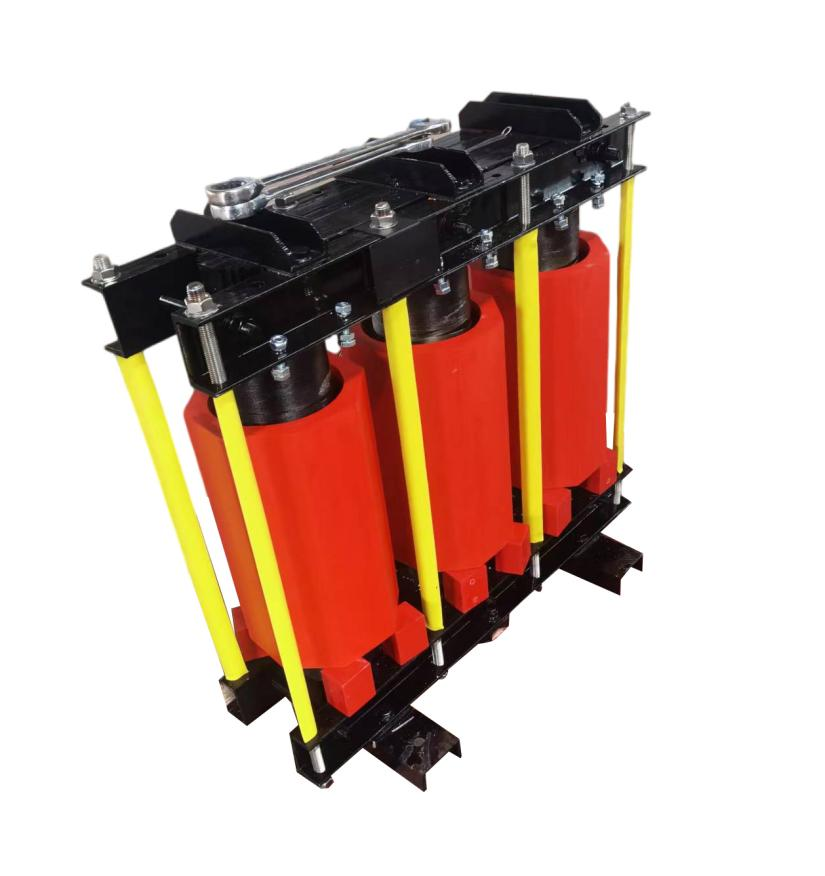
Dry-type transformers are generally built using either VPI (Vacuum Pressure Impregnated) or cast resin construction.
VPI transformers use vacuum and pressure to impregnate windings with insulating varnish. They offer good heat dissipation, lighter weight, and lower cost. They work well in clean, dry indoor environments such as office buildings and commercial facilities. In high humidity or contaminated environments, long-term performance may be affected.
Cast resin transformers fully encapsulate the windings in epoxy resin. They provide stronger resistance to moisture, dust, and corrosive conditions. Partial discharge levels are typically lower, and insulation stability is higher. This design is better suited for basements, coastal areas, photovoltaic plants, chemical facilities, and other demanding environments.
“High quality” does not mean one construction is always better. It means the design matches the application.
3. Key Technical Indicators: What Really Matters
The real difference in quality is reflected in design margins and test data.
Insulation system. Common insulation classes are 155°C (Class F) and 180°C (Class H). Higher-quality designs often use higher-class materials while operating at lower temperature rise limits. This provides thermal margin and extends service life.
Partial discharge (PD). PD level is a critical indicator of insulation integrity. Quality dry-type transformers typically maintain PD below 10 pC, with premium designs reaching 5 pC or lower. Factory test curves should be available. Lower PD generally means longer insulation life and improved reliability.
Temperature rise. Standard rises such as 80K or 100K should allow stable operation at full load without pushing thermal limits. For higher ambient temperatures or heavy loading, forced-air cooling may be required.
Short-circuit strength. Mechanical withstand capability is essential. Reputable manufacturers design and verify performance according to IEC or IEEE short-circuit requirements. Short-circuit events are rare, but when they occur, mechanical integrity determines whether the transformer survives.
4. Materials and Manufacturing: Where Quality Is Built
Many quality differences are not visible from the outside. Core steel grade affects no-load loss and noise. Copper purity influences conductivity and thermal performance. Resin formulation impacts flame resistance and long-term insulation stability. Proper stress control in the windings reduces the risk of mechanical deformation over time.
A well-designed transformer accounts for electromagnetic forces and thermal expansion. These design details determine whether the unit runs reliably for ten years or begins to show insulation problems after only a few.
5. Application Matching: Proper Selection Matters More Than Over-Specification
“High quality” does not mean the highest ratings. It means the right configuration for the job. Selection should consider altitude, ambient temperature, enclosure rating (IP20, IP23, or higher), harmonic content from nonlinear loads, and whether a K-factor rating is required.
Many field issues are caused by incorrect selection, not poor manufacturing. A professional manufacturer works closely with engineers during the design phase rather than simply offering a catalog model.
Conclusion
Selecting a high-quality dry-type transformer means selecting long-term system reliability. The unit should meet recognized standards, maintain low partial discharge levels, provide reasonable thermal margin, offer verified short-circuit strength, and match the operating environment. A comprehensive evaluation of compliance, construction, testing data, and manufacturing quality is far more meaningful than comparing nameplate data alone.
With over 40 years of manufacturing experience, DSJ Electrical Co., Ltd. specializes in transformer production and power equipment solutions. The company maintains UL, CE, and ISO certifications and operates under a mature quality control system. Its dry-type transformers are designed to meet international standards and to support a wide range of commercial and industrial applications.
For exclusive deals and latest offers, sign up by entering your email address below.



 +86 18513032986
 FLC Center, Chaoyang District, Beijing, China
Copyright © DSJ Electrical Co., Ltd. All Rights Reserved
Power Distribution Equipment & System Manufacturer