+86 18513032986


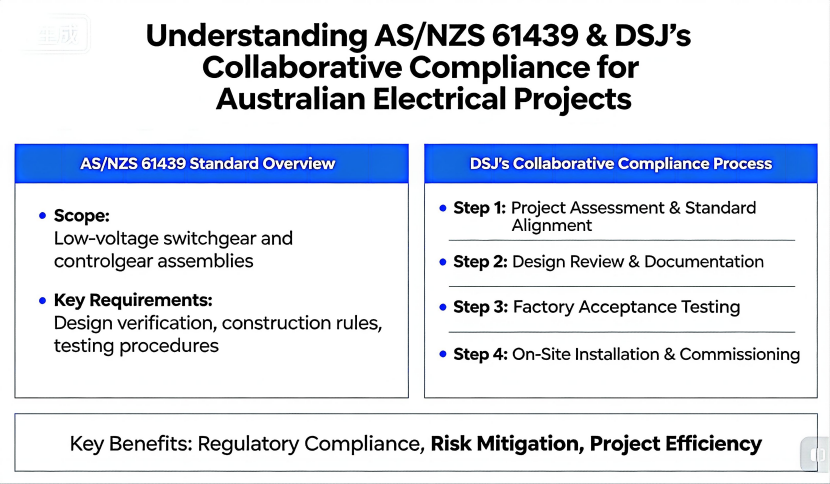
Understanding AS/NZS 61439 & DSJ's Collaborative Compliance for Australian Electrical Projects
Admin 2026-06-10In the global electrical manufacturing industry, compliance with regional standards is non-negotiable—especially for low-voltage switchgear assemblies exported to Australia and New Zealand. Among the most critical benchmarks are AS/NZS 61439 (Low-Voltage Switchgear and Controlgear Assemblies) and AS/NZS 3000 (Wiring Rules), which govern the design, construction, testing, and safety performance of electrical equipment nationwide. For Chinese manufacturers like DSJ ELECTRICAL (DSJ), mastering these standards and fostering seamless collaboration with Australian clients is the cornerstone of delivering reliable, code-compliant switchboards. This article demystifies AS/NZS 61439, explains its synergy with AS/NZS 3000, and highlights how DSJ partners with Australian customers to build switchboards that meet the strictest local requirements.

What Is AS/NZS 61439? The Gold Standard for Low-Voltage Assemblies
Published in May 2016, AS/NZS 61439 is the joint Australian/New Zealand standard that replaced the outdated AS/NZS 3439, aligning local regulations with the international IEC 61439 framework while incorporating region-specific safety and performance modifications. It applies to low-voltage switchgear and controlgear assemblies with rated voltages up to 1,000 V AC or 1,500 V DC—encompassing power distribution switchboards, motor control centers, and distribution boards for residential, commercial, and industrial use.
The standard comprises 8 interconnected parts, each addressing distinct assembly categories and requirements:
Part 0: Guide for specifiers (tender and project planning phase)
Part 1: General rules (core definitions, construction, and verification criteria)
Part 2: Power switchgear and controlgear assemblies (main switchboards and industrial panels)
Part 3: Distribution boards for ordinary persons (residential/commercial DBs)
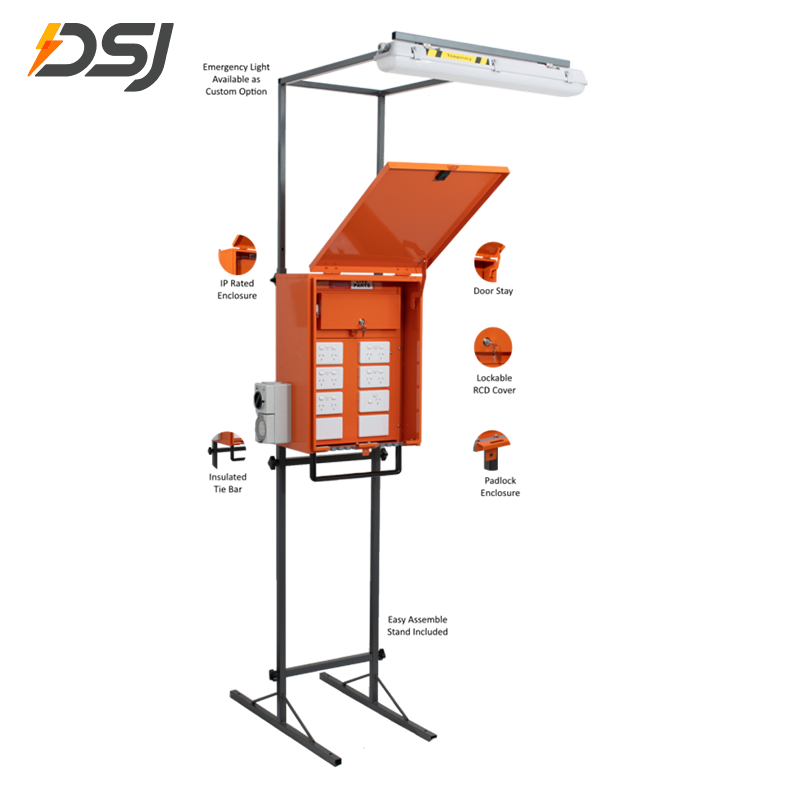
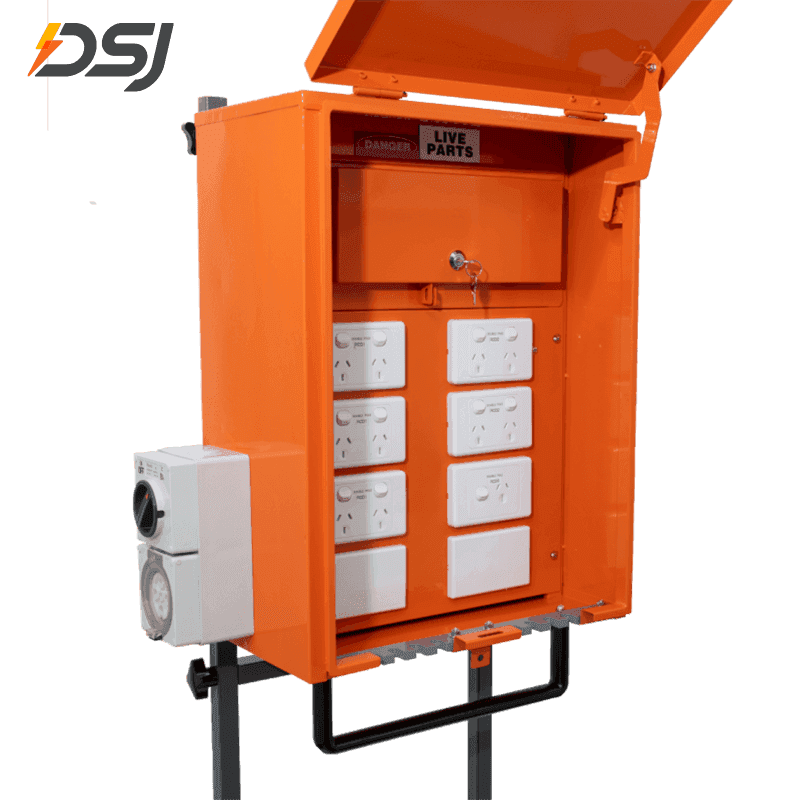
Part 4: Construction site assemblies (temporary power panels)
Part 5: Public network distribution assemblies
Part 6: Busbar trunking systems (busways)
Part 7: Assemblies for specific applications (e.g., marine, railway)
At its core, AS/NZS 61439 prioritizes safety, clarity, and global interoperability. It mandates strict testing for temperature rise, dielectric strength, short-circuit resistance, and IP (ingress protection) ratings—critical for withstanding Australia’s harsh environmental conditions, from high temperatures to coastal salt corrosion. A key update from the old standard is the replacement of “type-tested (TTA)” and “partially type-tested (PTTA)” classifications with flexible alternative design verification methods, allowing manufacturers to validate performance through testing, calculation, or proven field experience. This flexibility, paired with rigorous safety thresholds (e.g., a maximum copper busbar temperature rise of 105°C above ambient), ensures long-term reliability and reduces fire and shock risks.
AS/NZS 3000: The “Wiring Rules” That Complement 61439
While AS/NZS 61439 governs switchboard design and manufacturing, AS/NZS 3000 (2018 edition), known as the Australian/New Zealand Wiring Rules, sets the legal and safety framework for electrical installations across both countriesAustralian Standards Store. Legally enforceable in all Australian states, it mandates that all new electrical assemblies comply with AS/NZS 61439, creating a direct link between the two standards.
AS/NZS 3000 focuses on installation safety, wiring practices, and verification, covering:
Minimum clearances for live parts and earthing systems
Circuit protection (RCDs, MCBs) and fault current limits
IP protection requirements for enclosures (e.g., IP2X for live part protection during maintenance)
Mandatory pre-energization testing (visual inspection, earth fault loop impedance, insulation resistance)
Together, AS/NZS 61439 and AS/NZS 3000 form a dual compliance mandate: switchboards must be designed and built to 61439, then installed and tested to 3000—ensuring end-to-end safety from factory to site.
DSJ ELECTRICAL: Bridging Chinese Manufacturing and Australian Compliance
As a leading Chinese manufacturer of low-voltage switchgear with deep experience in Australian projects, DSJ ELECTRICAL (DSJ) has built its reputation on translating Australian standards into actionable manufacturing processes and collaborating closely with local clients to align every detail with project and regulatory needs. For DSJ, compliance is not just a checklist—it is a collaborative journey with Australian partners, rooted in communication, technical expertise, and respect for local norms.
1.Early Collaboration: Aligning Expectations and Standards
DSJ’s compliance process begins before manufacturing, with intensive pre-project collaboration with Australian clients. Recognizing that every Australian project has unique site conditions (e.g., industrial vs. commercial, coastal vs. inland) and client-specific requirements, DSJ’s engineering team works directly with the client’s project managers and electrical engineers to:
Review project specifications and cross-reference with AS/NZS 61439 (Part 2 for industrial switchboards) and AS/NZS 3000 clauses
Clarify critical parameters: voltage ratings, short-circuit withstand capacity, IP ratings (typically IP54 for industrial Australian sites), and busbar temperature limits
Agree on design deliverables: detailed sheet metal drawings, 3D models, and Bills of Materials (BOM)—all translated into English and formatted to Australian engineering conventions
This early alignment eliminates costly rework and ensures DSJ’s team understands not just the “what” of the standards, but the “why” behind Australian safety priorities (e.g., strict earthing requirements for bushfire-prone areas).
2.Design Excellence: Engineering for AS/NZS 61439 and Australian Needs
DSJ’s in-house engineering team specializes in AS/NZS 61439-compliant design, with every switchboard tailored to meet both regulatory and project-specific demands. For Australian clients, DSJ goes beyond basic compliance by:
Detailing Sheet Metal and 3D Drawings: As standard practice for Australian collaborations, DSJ provides fully dimensioned sheet metal fabrication drawings and 3D models. These documents adhere to Australian engineering drawing standards, enabling the client to validate enclosure dimensions, component layout, and busbar routing—critical for on-site installation and maintenance.
Specifying Australian-Approved Components: DSJ sources components (circuit breakers, busbars, enclosures) that meet both AS/NZS 61439 and local Australian approvals (e.g., SAA certification). This includes high-temperature-resistant copper busbars (rated for 105°C rise) and corrosion-resistant enclosures for coastal Australian projects.
Integrating AS/NZS 3000 Wiring Rules: During design, DSJ embeds 3000 requirements into the switchboard layout: minimum 750 mm front working space, IP2X protection for live parts, and dedicated earthing busbars compliant with Clause 5 of AS/NZS 3000.
3.Transparent Manufacturing and Rigorous Testing
DSJ’s manufacturing facility operates under ISO 9001 quality management systems, with every production stage monitored to maintain AS/NZS 61439 compliance. To keep Australian clients informed, DSJ provides real-time progress updates—including photos, videos, and inspection reports—during fabrication.
Before shipment, all switchboards undergo full AS/NZS 61439 verification testing, including:
Temperature rise testing (to validate busbar and component heat dissipation)
Dielectric strength and insulation resistance testing
Short-circuit withstand testing
IP rating verification (per AS/NZS 60529)
DSJ also prepares a comprehensive compliance dossier for each project, including test reports, material certificates, and a Statement of Compliance signed by DSJ’s senior engineers. This dossier is critical for Australian clients to pass local electrical inspections and meet AS/NZS 3000’s pre-energization requirements.
4.Agile Post-Delivery Support: Adapting to Client Feedback
DSJ’s collaboration does not end with shipment. Understanding that Australian clients may request minor adjustments after reviewing drawings or receiving the switchboard, DSJ maintains agile post-delivery support—including overtime work on Fridays or weekends—to implement revisions quickly. This flexibility minimizes project delays and aligns with Australian clients’ tight construction schedules.
Additionally, DSJ’s team provides on-site technical guidance (via video call or in-person for key projects) to assist with installation, ensuring the switchboard is integrated in full compliance with AS/NZS 3000’s wiring and earthing rules.
Conclusion: DSJ—Your Trusted Partner for Australian-Compliant Switchboards
AS/NZS 61439 and AS/NZS 3000 are more than just standards—they are the foundation of safe, reliable electrical infrastructure in Australia. For Chinese manufacturers, compliance requires not just technical expertise, but a commitment to collaboration, transparency, and understanding local needs.
As a seasoned partner for Australian electrical projects, DSJ ELECTRICAL combines deep knowledge of AS/NZS 61439 and 3000 with a client-centric approach, delivering custom-designed switchboards that meet every regulatory and project requirement. From early design alignment to rigorous testing and agile post-delivery support, DSJ works hand-in-hand with Australian clients to turn their project goals into reality—safely, efficiently, and in full compliance with Australian standards.
As DSJ continues to expand its Australian footprint, it remains dedicated to one mission: building long-term partnerships based on quality, compliance, and mutual success—one switchboard at a time.
For exclusive deals and latest offers, sign up by entering your email address below.



 +86 18513032986
 FLC Center, Chaoyang District, Beijing, China
Copyright © DSJ Electrical Co., Ltd. All Rights Reserved
Power Distribution Equipment & System Manufacturer