+86 18513032986


What are the differences between MCB, MCCB, RCB, and RCBO?
Admin 2025-12-12Content
As core protection devices in modern electrical systems, circuit breakers are crucial for ensuring safe circuit operation and preventing fires and electric shocks. In various applications, we frequently encounter these four common protection devices: MCB、MCCB、RCB、RCBO.
What are MCB and MCCB?
In the field of electrical protection, MCB、MCCB、RCB、RCBO are the two most basic and common overcurrent protection devices.
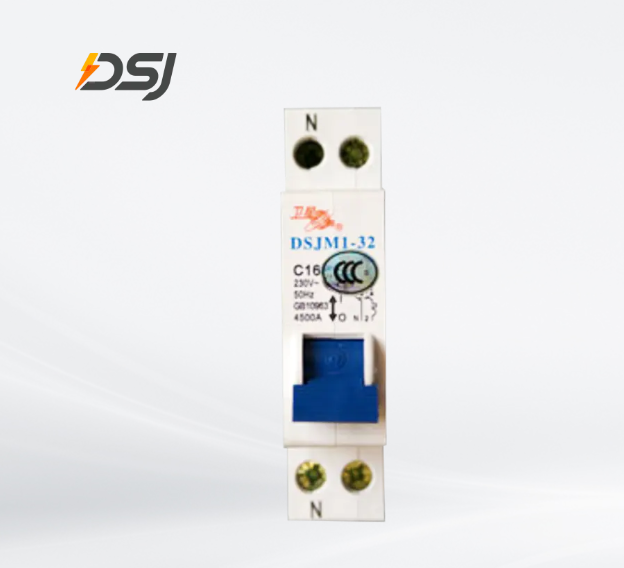
MCB (Miniature Circuit Breaker):
- Primarily used in terminal power distribution systems, such as residential and small commercial buildings.
- Rated current typically ranges from 1A to 125A.
- Primarily provides overload and short-circuit protection.
- Compact design, typically installed within a distribution board (DB).
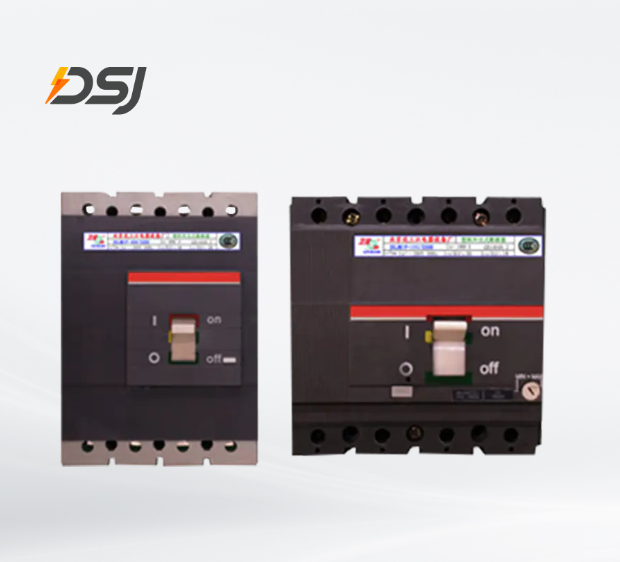
MCCB (Moulded Case Circuit Breaker):
- Used for circuit protection with higher currents, such as main incoming lines and feeder circuits in industrial and large commercial buildings.
- Wide rated current range, typically from 100A to 2500A or even higher.
- Also provides overload and short-circuit protection.
- Their trip units are usually adjustable or replaceable, allowing for more flexible setting of protection parameters.
Similarities between MCB and MCCB
Both MCBs and MCCBs share the core function of protecting circuits from overcurrent damage (including prolonged overloads and transient short circuits). They both protect equipment and cables by rapidly interrupting current through mechanical or electronic mechanisms when a fault occurs.
Differences between MCB and MCCB
| Characteristics | MCB (Miniature Circuit Breaker) | MCCB (Molded Case Circuit Breaker) |
| Rated Current | Lower Amplitude (typically ≤125A) | Higher Amount (typically ≥100A) |
| Applications | Terminal distribution, residential, small commercial | Main Incoming Line, Feeder Line, Industrial, Large Commercial |
| Breaking Capacity | Lower Amplitude | Higher Amount |
| Protection Parameters | Fixed or limitedly adjustable | Typically Adjustable (Thermal Trip/Electromagnetic Trip) |
| Size/Dimensions | Compact | Larger Amount |
Summary: MCBs protect small branch circuits, while MCCBs protect large main circuits.
What are RCB and RCBO?
Both RCB and RCBO devices focus on a more specific hazard: residual current (or leakage current), a leading cause of electric shock and electrical fires.
RCB (Residual Current Breaker):
- In Chinese standards, it is usually called a residual current circuit breaker or residual current operated device (RCD).
- Its sole function is to detect residual current (the difference between the current in the live wire and the neutral wire) and disconnect the circuit.
- Important difference: RCB/RCD does not provide overload or short-circuit protection; it needs to be used in series with MCB/MCCB to provide comprehensive protection.
RCBO (Residual Current Breaker with Overcurrent Protection):
- This is an integrated protection device.
- It provides both residual current protection (leakage current protection) and overcurrent protection (overload and short-circuit protection).
RCB vs. RCBO: Similarities
Both RCBs and RCBOs focus on detecting and responding to residual current. They both achieve leakage current protection by monitoring the current balance between the incoming and outgoing circuits, and trip rapidly once the detected current difference exceeds a preset leakage current (e.g., 30mA).
What are the differences between RCBs and RCBOs?
An RCBO can be considered an integrated protection unit that combines the leakage current protection function of an RCD/RCB with the overcurrent protection function of an MCB in one device.
| Features | RCB/RCD (Residual Current Circuit Breaker) | RCBO (Residual Current Circuit Breaker with Overcurrent Protection) |
| Main Functions | Leakage current (residual current) protection only | Leakage and Overcurrent Protection |
| Overcurrent Protection | None | Available for (Overload and Short Circuit) |
| Usage Method | Needs to be used in series with MCB | Can be used as a standalone protection device |
| Installation Space | Requires two module positions (RCB + MCB) | Requires only one module slot |
Key Differences Among the Four
To understand these four devices, simply remember their scope of responsibility:
- MCB/MCCB: Responsible for overcurrent protection (overload, short circuit).
- RCCB/RCD: Responsible for residual current protection (leakage current, electric shock protection).
- RCBO: Responsible for comprehensive protection against both overcurrent and residual current.
When selecting a protection device, the choice must be made based on the installation location, current magnitude, and required protection type: MCCB for large circuits; MCB for small circuits; RCBO is the ideal choice when space saving and comprehensive protection are required; if only supplemental leakage protection is needed, RCB/RCD should be used in conjunction with the existing MCB/MCCB.
For exclusive deals and latest offers, sign up by entering your email address below.




 +86 18513032986
 FLC Center, Chaoyang District, Beijing, China
Copyright © DSJ Electrical Co., Ltd. All Rights Reserved
Power Distribution Equipment & System Manufacturer