+86 18513032986


What is a transformer?
Admin 2025-10-11Content
- 1 1. What is a transformer?
- 2 2. What is the purpose of a transformer?
- 3 3. How Do Transformers Work?
- 4 4. Can a transformer convert AC to DC?
- 5 5. What are the four types of transformers? (Classification by Key Characteristics)
- 6 6. Transformer Operation, Maintenance, and Common Fault Diagnosis
- 6.1 6.1. Daily Inspections: "Look, Listen, Ask, and Feel" to Ensure Safe Transformer Operation
- 6.2 6.2. Core Maintenance: Differences in Priorities between Oil-Immersed and Dry-Type Transformers
- 6.3 6.3. Fault Diagnosis and Treatment: Common Transformer Symptoms
- 6.4 6.4. Key to Extending Lifespan: Preventive Testing and Overload Control
Electricity is the foundation of everything that drives us. You probably know that electricity transmission requires high-voltage lines, but did you know that a crucial instrument is involved in efficiently and safely transferring electricity from power plants to end users? The transformer. It's not only a core component of the power system but also the cornerstone of the stable operation of many electronic devices.
1. What is a transformer?
A transformer is a stationary electrical device that uses the principle of electromagnetic induction to convert alternating current (AC) in one circuit at the same frequency into AC at a different voltage in another circuit.
Because the transformer has no rotating parts, it is structurally stable and reliable. However, its operating principle dictates that it can only operate on alternating current (current with cyclical variations in magnitude and direction).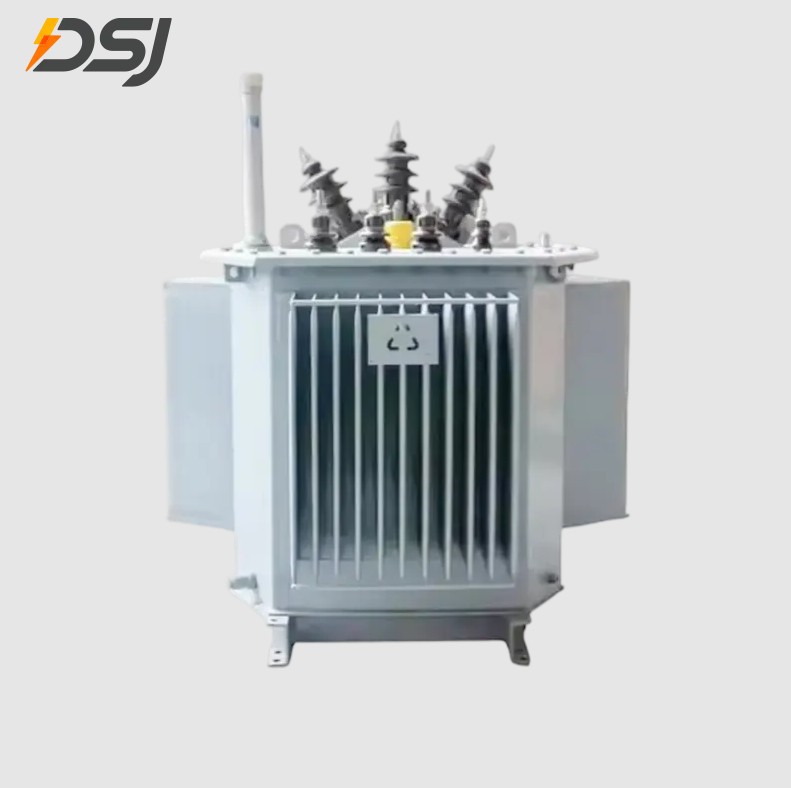
The Three Core Components of a Transformer
A fully functional transformer, regardless of size, consists of three main components:
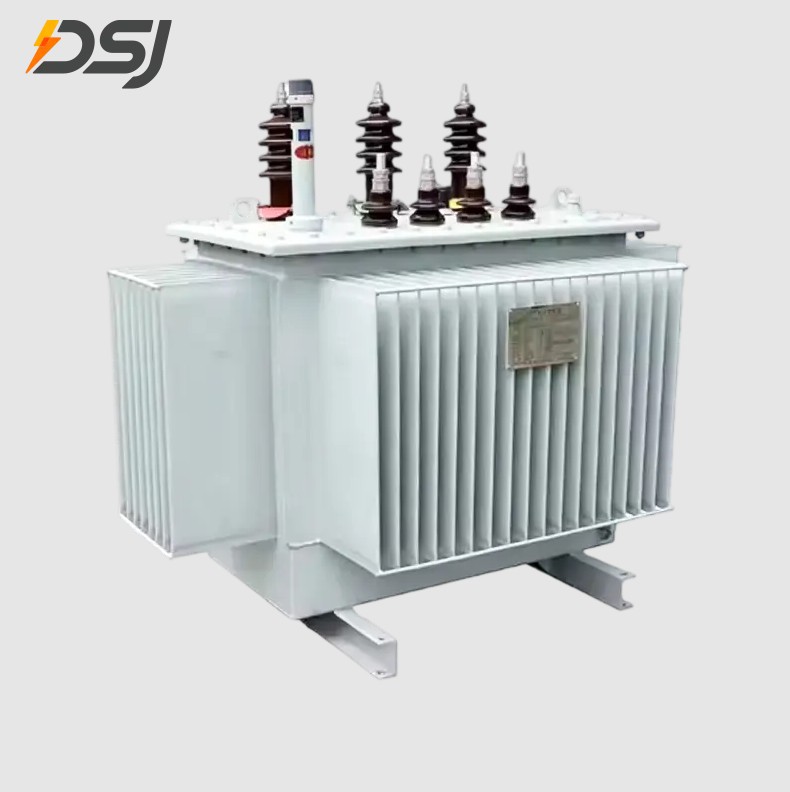
- Core: Serves as the primary path for the magnetic circuit. It is typically constructed from a laminate of thin, high-permeability silicon steel sheets (typically 0.35-0.5mm thick) and coated with an insulating varnish to reduce hysteresis and eddy current losses and ensure magnetic flux concentration.
- Primary Winding (Primary Coil, N1): This coil is connected to the input power source (grid or power supply equipment). When AC current is input, it generates alternating magnetic flux in the iron core.
- Secondary Winding (Secondary Coil, N2): This coil is connected to the output load (electrical device). It is responsible for transmitting the induced voltage.
The primary and secondary windings are completely isolated electrically, but they achieve contactless energy transfer through a shared magnetic field (iron core).
2. What is the purpose of a transformer?
Transformers are used in every aspect of modern society, significantly improving the economic and safe use of electrical energy.
2.1 The Cornerstone of Power Transmission and Distribution Systems: Voltage Step-Up and Voltage Step-Down
This is the primary and most important function of transformers:
Voltage Step-Up (High-Efficiency Transmission): In power plants (such as thermal, hydropower, and nuclear power plants), the generator output voltage is relatively low. Step-up transformers increase this voltage to ultra-high voltages (such as 110kV, 500kV, or even higher). Based on the principle of constant power (P=U⋅I), as voltage (U) increases, current (I) decreases. This significantly reduces energy losses (Ploss=I²R) on transmission lines, enabling long-distance, high-efficiency transmission of electrical energy. This is one of the key advantages of alternating current (AC) over direct current (DC).
Voltage Step-Down (Safe Power Use): At locations close to users, such as urban substations and residential distribution rooms, step-down transformers gradually reduce high voltages to voltage levels that users can safely use (such as 380V for industrial use or 220V/110V for residential use), ensuring safe power use.
2.2 Diverse Uses in Industrial and Electronic Applications
Besides power systems, transformers play a key role in other areas:
- Impedance Matching: In electronic and communications circuits, they are used to connect circuits with different impedances to maximize power transfer, such as audio transformers.
- Circuit Isolation: Isolation transformers completely isolate the primary and secondary sides of power supply lines from load circuits, preventing electric shock hazards and improving measurement and maintenance safety.
- Instrument Measurement: Instrument transformers (current transformers and voltage transformers) are used to proportionally convert high currents and high voltages in circuits into low voltages and low currents for use in measuring instruments and relay protection devices.
3. How Do Transformers Work?
The operating principle of a transformer is based on two core laws of electromagnetism: Faraday's law of electromagnetic induction and Lenz's law.
Detailed Steps:
- Inputting Alternating Current: When an alternating voltage V1 with a frequency f is applied to the primary winding N1, an alternating current I1 is generated.
- Generating Alternating Magnetic Flux: According to the principles of electromagnetism, current I1 generates an alternating magnetic flux Φ in the iron core, whose magnitude and direction change periodically with time.
- Magnetic Flux Coupling: Nearly all of this magnetic flux Φ passes through the highly permeable iron core, interlinking with the secondary winding N2.
- Induced Electromotive Force: According to Faraday's law of electromagnetic induction, the alternating magnetic flux cuts through the secondary winding N2, inducing an electromotive force V2.
Key Transformation Formula: Turns Ratio Determines Voltage Ratio
Under ideal conditions, the primary and secondary voltages V1 and V2 are strictly proportional to the number of turns N1 and N2:
V2 / V1 = N2 / N1 = k (turns ratio)
If the turns ratio k > 1 (i.e., N1 > N2), then V2 < V1, achieving voltage reduction.
If the turns ratio k is less than 1 (i.e., N1 < N2), then V2 > V1, achieving a voltage boost.
At the same time, to ensure energy conservation, power P remains constant (ignoring losses), and voltage and current are inversely proportional: V1 I1 = V2 I2.
4. Can a transformer convert AC to DC?
The answer to this question is a resounding "no."
The operating principle of a transformer relies on a changing magnetic flux. Direct current (DC) is a current with a constant direction and magnitude, and the magnetic field it generates is also constant. A constant magnetic field does not induce an electromotive force, so conventional transformers cannot operate in a pure DC environment.
The Complete AC/DC Conversion Process
In everyday life, we often see power adapters that convert 220V AC to 5V DC. This is actually the result of the coordinated operation of multiple circuits, not the function of a single transformer:
- Transformation: A transformer first steps down 220V AC to a lower AC voltage (such as 12V AC).
- Rectification: A rectifier (usually a bridge circuit consisting of diodes) converts AC power into pulsating DC power.
- Filtering: A filter (usually a large-capacity capacitor) smooths pulsating DC power, making it closer to pure DC.
- Voltage Regulator: A voltage regulator (such as a voltage regulator chip) regulates unstable DC power into a precise, stable output voltage.
Thus, the transformer only regulates voltage, while the rectifier is the core component that converts current.
5. What are the four types of transformers? (Classification by Key Characteristics)
There are various classification criteria for transformer types. The following are the four most common types, covering differences in function and structure:
Transformers are categorized in various ways, and they are divided into different types based on different designs and application scenarios. For ease of understanding and application, they can generally be categorized based on two main dimensions: function and structure. The following are the four most common types of transformers:
- Power transformers: These transformers are core equipment in power systems, primarily used for power generation, transmission, and distribution. They possess enormous capacity and are responsible for stepping up voltage at power plants to reduce losses and stepping it down at various substations for user use.
- Instrument transformers: These transformers primarily serve measurement and protection systems and are subdivided into voltage transformers and current transformers. Their purpose is to precisely convert (step down) the high voltage and current on transmission lines to low voltage and low current, enabling the safe and accurate operation of measuring instruments, control equipment, and relay protection devices.
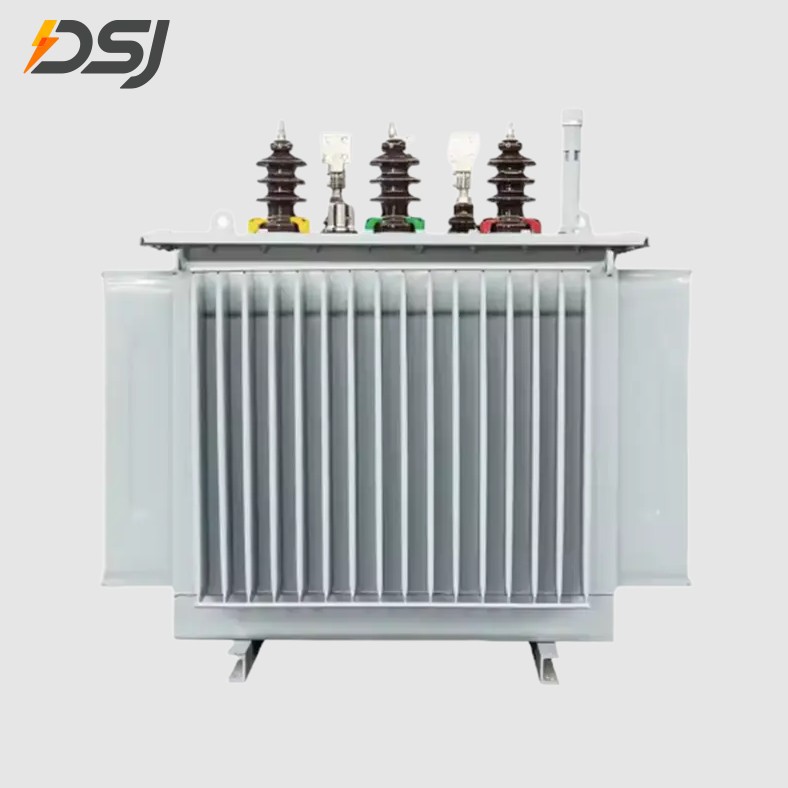
- Oil-immersed transformers: This classification is based on their cooling and insulation methods. The core and windings of oil-immersed transformers are immersed in transformer oil. Oil has excellent insulating and thermal conductivity, effectively dissipating heat generated during operation. Therefore, these transformers are typically larger in capacity and are suitable for outdoor use and large substations.
- Dry-type transformers: Also based on their cooling method, dry-type transformers do not use a liquid dielectric, but are cast in epoxy resin or insulated with air. Since they do not contain flammable oil, they have excellent fire safety and are therefore often used in places with extremely high fire protection requirements, such as indoors, high-rise buildings, commercial centers, hospitals, etc.
6. Transformer Operation, Maintenance, and Common Fault Diagnosis
As core equipment in the power system, the safe and stable operation of transformers is directly related to the power supply quality of the entire power grid and the production efficiency of enterprises. A failure can not only cause prolonged power outages but also result in significant economic losses. Therefore, mastering proper transformer maintenance and fault diagnosis methods is essential for all power and equipment operators and maintenance personnel. This article provides a detailed transformer maintenance guide, explaining key points for daily inspections, common fault types, and corresponding treatment strategies, to ensure the long-term, efficient, and reliable operation of your transformer.
6.1. Daily Inspections: "Look, Listen, Ask, and Feel" to Ensure Safe Transformer Operation
Effective transformer maintenance begins with daily inspections based on "look, listen, ask, and feel." Promptly detecting subtle anomalies is key to preventing minor problems from escalating into major incidents.
| Inspection Key Points | Inspection Details | Abnormal Symptoms and Indications |
| Observe (appearance and oil level) | Check the transformer body for cleanliness, bushing damage, and loose connections. For oil-immersed transformers, check the oil level and color. | Oil leaks, oil seepage, signs of bushing flashover, low oil level, or noticeable darkening of the oil. |
| Smell (sounds and odors) | Listen to see if the transformer is operating normally. | A normal humming sound changes to a harsh crackling sound (possibly due to electrical discharge), a strong roaring sound (possibly due to a short circuit), or an unusual odor (such as burning). |
| Ask (instrument data) | Check operating parameters such as oil temperature, winding temperature, voltage, and current. | The transformer temperature exceeds the specified upper temperature rise limit, or there is a significant imbalance in the three-phase current or voltage. |
| Check (heat dissipation and grounding) | Check the cooling system (fan, oil pump) for proper operation and the grounding wire. | The fan does not start, the heat sink temperature is abnormal, or the ground wire is corroded or loose. |
6.2. Core Maintenance: Differences in Priorities between Oil-Immersed and Dry-Type Transformers
Although all transformers require maintenance, oil-immersed and dry-type transformers differ in their structures and cooling methods, requiring different maintenance priorities.
6.2.1 Key Maintenance Points for Oil-Immersed Transformers: "Life Oil"
For oil-immersed transformers, insulating oil is their "lifeline" for insulation and heat dissipation, making oil quality management crucial.
Regular Oil Sampling: Regular dielectric strength testing, acid value testing, and chromatographic analysis of transformer oil are required. Chromatographic analysis is particularly critical, as it detects dissolved gas components (such as hydrogen, methane, and acetylene) in the oil and provides early warning of potential faults such as internal overheating or discharge.
Oil Level Adjustment: The oil level must be maintained within the normal range. A low oil level can expose the windings and compromise insulation; an excessively high oil level can cause the exhaust system to activate or oil leakage.
Breathing Device Maintenance: Regularly inspect and replace the silicone in the breathing device. Once the silica gel becomes saturated with moisture (its color changes from blue to red), it must be promptly replaced or regenerated to prevent external moisture from entering the oil tank and reducing the dielectric strength of the insulating oil.
6.2.2 Key Points in Dry-Type Transformer Maintenance - "Fire Prevention and Cleanliness"
Dry-type transformers do not require oil maintenance, but their maintenance focuses on environmental cleanliness and ventilation.
Ventilation and Heat Dissipation: Ensure good ventilation and heat dissipation in the dry-type transformer installation area to avoid excessive temperatures caused by poor ventilation during operation, which accelerates the aging of the insulation material.
Surface Cleaning: Regularly remove dust and dirt from the winding surfaces and ventilation ducts. This accumulation not only affects heat dissipation but can also cause surface flashover discharges in humid environments.
Temperature Monitoring: Closely monitor the temperature controller readings. If overload or abnormally high temperatures occur, immediately reduce the load or inspect the cooling fan.
6.3. Fault Diagnosis and Treatment: Common Transformer Symptoms
During the safe operation of a transformer, common fault types occur primarily in the insulation, core, and windings.
| Common fault types | Possible causes of failure | Initial Diagnostic Basis | Emergency Measures |
| Winding interturn short circuit | Loose windings due to insulation aging, overvoltage shock, or mechanical vibration. | A rapid increase in transformer temperature and unusual noises may indicate a tripped protective device. | Immediately stop the transformer and disconnect the power supply. |
| Multiple core grounding points | Insulation damage in the core fasteners, causing the core to contact the tank ground at different points. | A slow increase in transformer oil temperature, particularly during load changes, may reveal abnormalities through oil chromatography. | A power outage is required for detailed inspection and repair. |
| Tap changer failure | Poor contact, burnout, improper switching, or insufficient spring pressure. | When switching taps, there are large current or voltage fluctuations or unusual sparking noises. | Stop switching operations and, if necessary, shut down the power supply to inspect the tap changer. |
| Bushing flashover or oil leakage | Contaminated bushing surface, aging insulation, or damaged seals. | Flashover discharge or severe oil leakage may be visible. | Promptly clean or replace the bushing and repair the seals to prevent further insulation deterioration. |
6.4. Key to Extending Lifespan: Preventive Testing and Overload Control
To truly extend the lifespan of transformers and ensure safe operation, transformer maintenance must go beyond routine inspections.
Preventive Testing: Regularly conduct insulation resistance, leakage current, turns ratio, and impedance voltage tests. These test data are crucial for assessing the health of the transformer and can detect potential insulation defects and winding problems in advance.
Preventing Overload Operation: Strictly control the transformer's load current. Overload operation causes a sharp rise in winding temperature, accelerates insulation aging, and is the number one factor that shortens transformer lifespan. Even in special circumstances (such as winter), short-term overloads should be strictly controlled within the limits permitted by the manufacturer or regulations.
Through scientific routine inspections, targeted maintenance (such as oil quality management for oil-immersed transformers), and regular preventive testing, safe transformer operation can be maximized, ensuring efficient and long-lasting service life.
For exclusive deals and latest offers, sign up by entering your email address below.



 +86 18513032986
 FLC Center, Chaoyang District, Beijing, China
Copyright © DSJ Electrical Co., Ltd. All Rights Reserved
Power Distribution Equipment & System Manufacturer