+86 18513032986


What is an Industrial Generator?
Admin 2026-01-03Content
In modern industrial production, a stable power supply is the lifeblood of any enterprise. Whether on remote construction sites or in hospitals and data centers with extremely high requirements for power continuity, Industrial generators play an indispensable role.
I. Definition of an Industrial Generator
An industrial generator is a large-scale power device that converts mechanical energy into electrical energy. Unlike small portable household generators, industrial-grade generators are designed to handle high loads, long operating hours, and harsh working environments. They typically have higher output power, greater durability, and more complex control systems to meet the power demands of large-scale industrial facilities.
II. Working Principle of an Industrial Generator
The core principle is based on the law of electromagnetic induction discovered by the British scientist Faraday. Simply put, an industrial generator uses an engine (prime mover) to drive a rotor to rotate in a stator magnetic field.
Power Source: The engine (fuel, natural gas, etc.) generates mechanical energy through combustion.
Magnetic Field Cutting: The engine drives the rotor to rotate, causing the conductor to cut magnetic field lines within the magnetic field.
Current Generation: This motion induces current in the conductor, which, after rectification and voltage regulation, is output as alternating current (AC) suitable for industrial use.
III. Common Types of Industrial Generators
Based on energy source and application requirements, industrial generators are mainly classified as follows:
1. Diesel Generator Sets
Diesel generators are the most common choice in the industrial field.
Advantages: High fuel efficiency, long lifespan, fast start-up, and diesel fuel is non-flammable, offering high safety.
Applications: Backup power for construction sites, mines, and factories.
2. Gas Generators
Use natural gas, propane, or biogas as fuel.
Advantages: More environmentally friendly emissions; fuel supply can be achieved through pipelines, eliminating the need for on-site fuel storage.
Applications: Urban center buildings, green factories, combined heat and power (CHP) systems.
3. Heavy Oil and Dual-Fuel Generators
Mainly used in large power plants or ships. These devices can switch fuels according to cost, offering extremely high operating economics.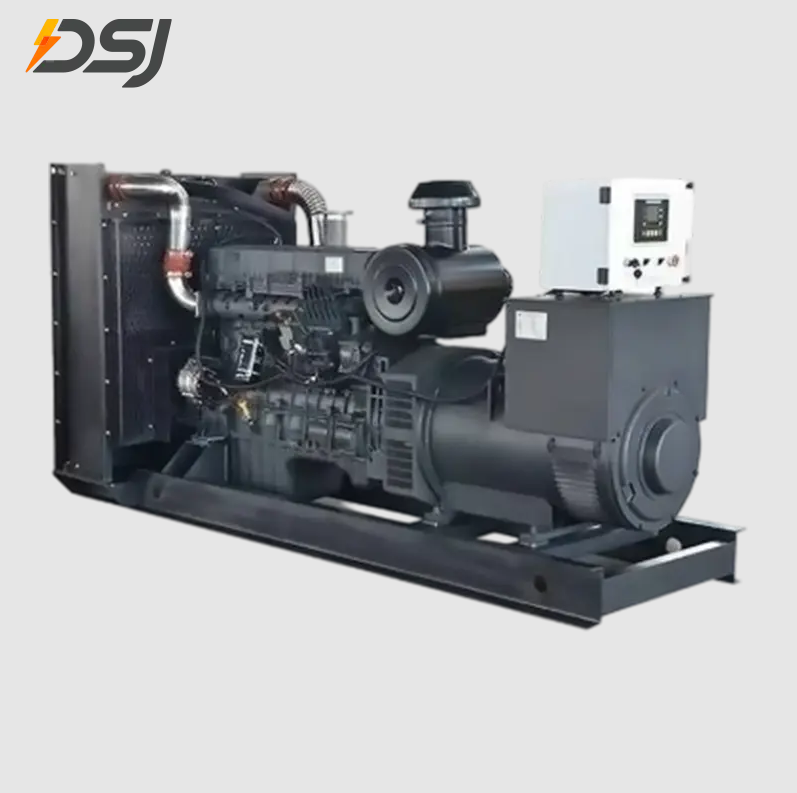
IV. Core Application Scenarios of Industrial Generators
As core equipment for power supply, Industrial generators have long been used in all corners of society. Here are some specific application scenarios in key industries:
Life Support in Healthcare
In Hospitals, industrial generators primarily serve as emergency backup power. Operating rooms, intensive care units (ICUs), and life support equipment have extremely high requirements for power continuity. Generators must possess extremely fast response times to ensure immediate intervention when mains power fails, guaranteeing patient safety.
Backup Power for Data Centers
For internet and financial data centers, power outages mean huge economic losses. Industrial generators are used in conjunction with UPS (Uninterruptible Power Supply) in such scenarios as a core backup power source, ensuring the stable operation of servers, cooling systems, and data transmission channels under any circumstances.
Production Continuity in Manufacturing
In large factories or automated production lines, generators often serve as continuous load power sources. Industrial generators can provide extremely stable voltage output, effectively preventing production line downtime due to voltage fluctuations or power outages, thereby avoiding costly raw material scrapping and equipment damage.
Main Power for Mining and Infrastructure
In remote mines, oil and gas extraction areas, or large infrastructure construction sites, connection to the city power grid is often impossible. In these situations, industrial generators become the main power source on-site. These types of equipment can operate at high intensity for extended periods in harsh environments such as extreme climates and high dust levels, providing power to the entire work area.
V. How to Choose the Right Industrial Generator?
When purchasing or leasing Industrial generators, companies need to consider the following core factors:
Power Load: Calculate the peak power (kW/kVA) of all equipment operating simultaneously.
Operating Frequency: Is it intended as an occasional standby power source or a primary power source operating daily?
Environmental Factors: High altitude, high temperature, or high humidity environments directly affect the generator's heat dissipation and output efficiency.
Noise Standards: If used near residential areas, units equipped with soundproof enclosures should be selected.
Industrial generators are not only "power insurance" for businesses but also the cornerstone of ensuring the normal operation of social infrastructure. Understanding their classification and performance helps companies make the most informed energy decisions when facing sudden power outages or operating in remote areas.
For exclusive deals and latest offers, sign up by entering your email address below.



 +86 18513032986
 FLC Center, Chaoyang District, Beijing, China
Copyright © DSJ Electrical Co., Ltd. All Rights Reserved
Power Distribution Equipment & System Manufacturer